



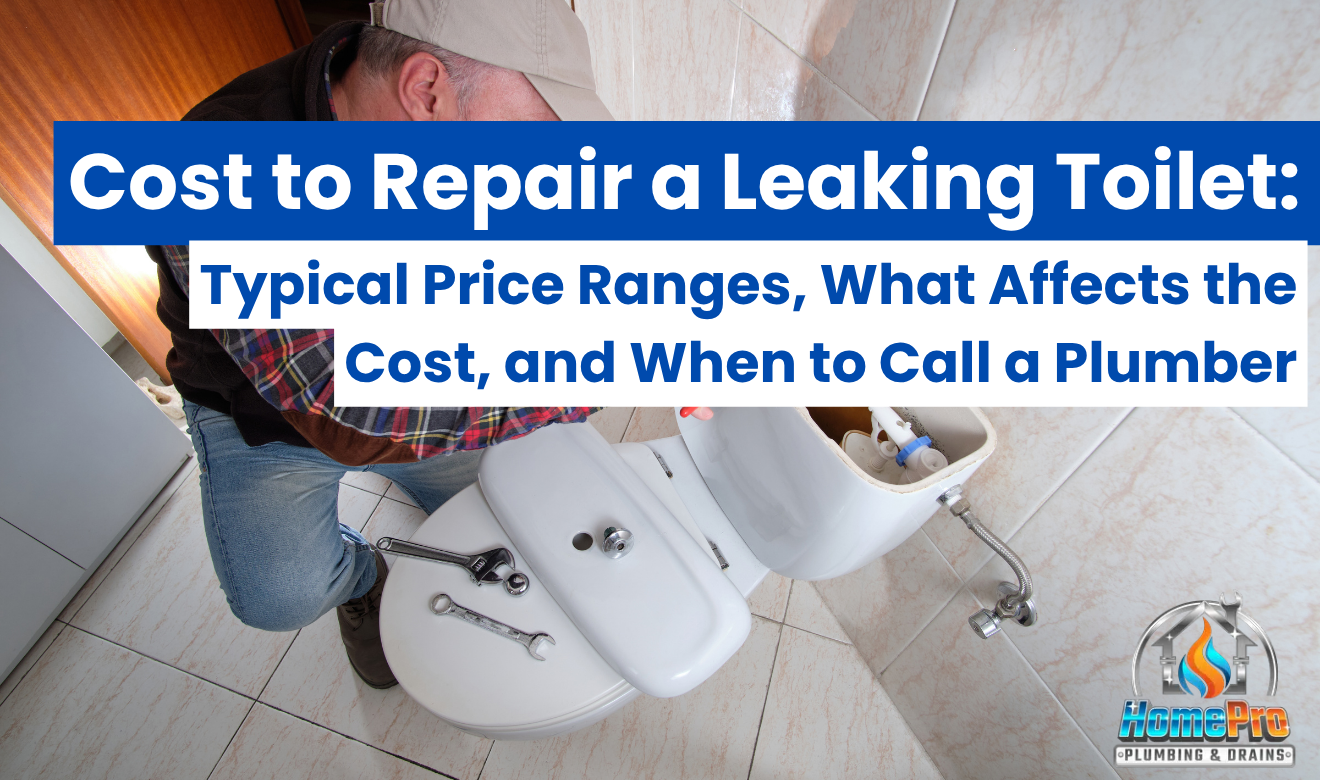
Cost to Repair a Leaking Toilet: Typical Price Ranges, What Affects the Cost, and When to Call a Plumber
Executive Summary
The cost to repair a leaking toilet is primarily determined by where the leak is occurring and whether the repair requires pulling and resetting the toilet, since internal tank fixes are usually quick while base and flange-related leaks can uncover hidden damage. The most reliable way to control total cost is accurate diagnosis first (often with simple observation or a dye test), followed by a repair that restores proper sealing, stability (no rocking), and a verified working shutoff.
Core Insights
- Leak location drives the tier: Internal tank leaks (flapper/fill/flush seals) are usually the lowest-cost repairs, while base leaks often cost more because they require removing the toilet and resealing at the flange.
- Corrosion and hidden damage create price spikes: Rusted bolts, cracked or improperly set flanges, and soft or water-damaged subflooring can expand a “simple leak” into a larger structural repair.
- Diagnosis prevents paying twice: Quick checks (paper towels, timing after flushing) and dye testing can confirm whether the problem is internal, supply-side, or at the base before parts are replaced unnecessarily.
The cost to repair a leaking toilet is the total price to diagnose the leak, replace the failed parts, and restore a watertight seal at the tank, bowl, and supply connections. In most homes, the cost to repair a leaking toilet falls into a few common ranges based on where the water is escaping and how accessible the toilet is. A simple internal leak usually involves a flapper, fill valve, or flush valve seal that lets water run from the tank into the bowl and triggers repeated refills. A typical fix includes shutting off the angle stop, draining the tank, swapping the worn rubber parts, and setting the correct water level and chain slack to prevent short-cycling. A base leak often shows up as water seeping from under the bowl after flushing, which commonly points to a failed wax ring, loose closet bolts, or a cracked flange; this repair can require pulling the toilet, inspecting the flange height, replacing the seal, and re-setting the bowl level to stop rocking. A supply-line or shutoff leak usually appears as dripping at the compression nut or valve stem, which can require replacing the braided connector, tightening or re-packing the valve, and verifying the stop fully closes. Costs rise when bolts are corroded, the flange is damaged, the subfloor is soft from prolonged leaking, or the toilet sits on tile that needs careful removal and re-caulking. Calling a plumber is usually the safest option when the leak is at the base, when water damage is visible, when the shutoff valve will not stop water, or when the toilet rocks and the floor feels spongy, because hidden flange and subfloor repairs can quickly exceed the price of basic parts.
What actually drives the total repair price
The final repair total comes from two buckets: the time to pinpoint the exact leak source and the scope of parts/labor needed to restore a watertight toilet. Access, corrosion, and hidden water damage are the main factors that push a small repair into a larger project.
Most leaking-toilet invoices are determined by:
- Leak location (tank-to-bowl, tank internals, base/wax ring, supply/stop valve).
- Toilet type (two-piece, one-piece, skirted base, wall-hung carrier systems).
- Condition of fasteners (rusted tank bolts, corroded closet bolts, seized angle stop).
- Flooring and access (tile with tight clearances, caulked bases, limited shutoff access).
- Damage beyond the seal (cracked flange, rotted subfloor, mold or swelling around the base).
- Compliance and workmanship standards (proper sealing, stable setting, correct water level, and verified shutoff).
Fast identification: where the water is escaping
Accurate diagnosis prevents paying twice: once for “parts swapping” and again for the real fix. A leaking toilet typically presents in a few repeatable patterns that can be verified with simple observations.
Use these quick checks before any repair:
- Water on the floor around the bowl after flushing: commonly wax ring, flange, loose bolts, rocking bowl, or a crack.
- Water running into the bowl when nobody flushed: commonly flapper/flush valve seal or fill valve issues.
- Drips at the wall/floor shutoff or supply connection: typically compression nut, valve stem packing, or supply line failure.
- Water between tank and bowl on a two-piece toilet: tank-to-bowl gasket or tank bolt seals.
- Condensation “sweating” (not a leak): tank exterior wet during humid conditions; resolved differently than a plumbing leak.
If you cannot isolate the source visually, dye testing (tank dye tablet or food coloring) distinguishes an internal tank-to-bowl leak from a base or supply leak: dye in the bowl without flushing indicates the flush valve/flapper seal is not holding.
Typical repair scopes (what a plumber actually does)
Most toilet leak repairs follow standardized steps: isolate water, disassemble only what’s needed, replace sealing surfaces, then verify performance under pressure and multiple flushes. A proper repair always ends with a stability check and a re-inspection for moisture.
Internal tank leak (flapper, fill valve, flush valve seal)
Internal leaks are the most common and usually the least invasive because the toilet stays in place. The repair focuses on restoring a reliable seal and a correct refill cycle to stop silent water loss.
- Shut off the angle stop and drain the tank.
- Replace the flapper and/or flush valve seal if worn, warped, or slimed with mineral scale.
- Service or replace the fill valve if it won’t shut off cleanly or the float setting is unstable.
- Set water level to the manufacturer’s mark to prevent overflow into the tube.
- Adjust chain slack so the flapper closes fully after each flush.
- Confirm no periodic refills and no dye migration into the bowl.
Tank-to-bowl leak (two-piece toilets)
This leak occurs at the gasketed joint and bolt penetrations between tank and bowl. Correcting it requires even bolt tension, new rubber seals, and careful alignment to avoid cracking porcelain.
- Replace tank-to-bowl gasket and bolt washers (rubber seals harden over time).
- Remove corrosion and confirm bolt holes are not compromised.
- Re-seat tank evenly; tighten both sides gradually to prevent rocking.
- Pressure test the tank after refill and inspect with dry paper towel around the joint.
Base leak (wax ring, flange, closet bolts, rocking toilet)
Base leaks are high-risk because they can damage the subfloor and rot the structure without obvious symptoms. The correct fix is to pull the toilet, confirm flange integrity and height, replace the seal, then reset the bowl level and stable.
- Pull the toilet (disconnect supply, remove caps/closet nuts, lift straight up).
- Inspect flange for cracks, movement, or improper height relative to finished floor.
- Remove old wax fully from horn and flange to ensure adhesion and proper compression.
- Replace seal (wax ring or alternative sealing system appropriate to flange height).
- Install new closet bolts if corroded; set bowl level with shims if needed.
- Reconnect and test with multiple flushes; verify zero seepage and no rocking.
When the flange is broken or too low/high, the job can expand into flange repair, spacer use, or subfloor work; that scope change is one of the biggest drivers of higher totals.
Supply line or shutoff valve leak
Supply-side leaks are usually visible at the wall valve or at the tank connection and must be corrected immediately to avoid continuous dripping into flooring. The safest approach often includes replacement of the braided connector and verification that the stop valve fully shuts off.
- Replace braided stainless supply connectors if they show corrosion, kinks, or seepage.
- Correct compression issues (tighten to manufacturer guidance; do not overtighten).
- Address valve stem seepage by gently tightening packing nut; if unreliable, replace the stop.
- Verify valve closure by observing the tank stop refilling with valve closed.
Cost ranges by repair type (parts + labor behavior)
Leak repairs cluster into a few predictable tiers based on whether the toilet must be pulled and whether structural components are compromised. A small internal rebuild is usually straightforward, while a base leak can become a flange/subfloor project once the toilet is lifted.
| Feature / Metric | Specifications | Local Guidelines |
|---|---|---|
| Internal tank leak scope | Flapper, fill valve, flush valve seal; water-level and refill calibration; dye verification | In drought-conscious regions like San Diego County, stopping silent running reduces unnecessary potable water use and may support conservation goals set by local water agencies |
| Base leak scope | Pull/reset toilet; replace wax ring; inspect/repair flange; level and stabilize bowl; multi-flush leak check | If subfloor damage or mold is present, remediation steps may be required to restore safe, dry conditions before re-setting fixtures |
| Supply/stop valve scope | Replace braided connector; address valve packing or replace angle stop; confirm full shutoff and no drips | A functional shutoff at each fixture is standard practice for emergency isolation; replace unreliable stops rather than forcing corroded valves |
| Common cost escalators | Corroded bolts; cracked flange; toilet replacement required; soft subfloor; difficult access; tile constraints | In California, plumbing work affecting potable supply connections is typically performed to code standards aligned with the California Plumbing Code (Title 24, Part 5) |
Instead of relying on a single number, estimate totals by matching your symptoms to a tier:
- Low complexity: internal tank parts replacement and adjustments (toilet stays bolted down).
- Medium complexity: tank-to-bowl reseal or supply/stop replacement with minor access limitations.
- High complexity: pull/reset toilet, flange repair, floor leveling, or water-damage drying and rebuild coordination.
When a “leak” is not a leak: condensation vs. seepage
Condensation can mimic a base leak by leaving water on the floor without any failed seal. The difference is timing and distribution: condensation wets the tank exterior uniformly, while leaks show directional drips or pooling after flushing.
To separate the two:
- Dry the tank and floor, then place dry paper towels around the base and under the supply connection.
- Do not flush for 30–60 minutes; if towels stay dry but the tank “sweats,” suspect condensation.
- Flush 3–5 times; if towels wet only after flushing, suspect wax ring/flange/base issues.
Condensation is addressed with a tank liner/insulating tank, reduced bathroom humidity (exhaust fan use), or a mixing valve system that tempers refill water, not with wax rings or tank bolts.
Code-aware workmanship checkpoints that prevent repeat leaks
Professional-grade results come from stability, correct sealing surfaces, and verified shutoff—not simply replacing rubber parts. Repairs should align with accepted plumbing methods described in the California Plumbing Code framework (Title 24, Part 5) and standard fixture installation instructions.
After any repair, verify these non-negotiables:
- No rocking at the bowl: rocking destroys wax seals; use shims and correct bolt tension.
- Even tank support: the tank should not “teeter” on bolt points; gasket compression must be uniform.
- Proper refill tube placement: tube must discharge into overflow without being submerged (reduces back-siphon risk into tank water).
- Functional fixture shutoff: angle stop must close fully so emergencies don’t become whole-house shutoffs.
- Dry verification: wipe connections, then recheck after multiple flushes and a 10–15 minute dwell.
If you want a plain-language overview of how household plumbing systems are typically organized (supply, drainage, venting), see plumbing for background context that helps homeowners understand why certain leaks show up where they do.
When leak diagnosis becomes the main cost factor
Some toilets “leak” only intermittently, or water appears away from the fixture due to flooring paths, baseboards, or slab movement. In those cases, the price is driven by time-on-site and the tools needed to confirm the source.
These scenarios often require targeted detection steps:
- Intermittent base moisture with no obvious drip: may require moisture mapping and inspection under/around flooring transitions.
- High water bill with no visible running: verify with dye, then check flapper sealing and overflow-level issues.
- Multiple fixtures affected: may indicate supply pressure irregularities or drainage/vent issues rather than a single toilet fault.
For a deeper view of what detection can involve and how it affects totals, reference leak detection services cost.
DIY vs. plumber: a decision checklist that protects the subfloor
DIY can be appropriate for simple tank internals if you can fully shut off water and you follow manufacturer instructions. A plumber is the safer option when the toilet must be pulled, when the shutoff valve fails, or when there are signs of structural moisture.
DIY is usually reasonable when:
- The shutoff valve fully closes and holds.
- The leak is clearly inside the tank (confirmed by dye test).
- You can obtain the correct parts matching your toilet model.
Professional repair is strongly indicated when:
- Water is coming from under the bowl or the toilet rocks.
- The floor feels spongy or shows staining, swelling, or odor.
- The angle stop won’t shut off or the valve/supply connection is corroded.
- The toilet is skirted, wall-hung, or otherwise difficult to access.
If you’re scheduling a qualified repair for a persistent leak, start with toilet repair & installation services so the visit includes proper diagnosis, sealing, and stability checks—not just a parts swap.
How to keep the repair from coming back (and protect your water bill)
Most repeat leaks are caused by movement (rocking), incorrect water level, or old shutoff/supply hardware that starts dripping after being disturbed. A few preventive checks after repair reduce rework and secondary damage.
Use this post-repair prevention list:
- Recheck the base the next day: wipe dry, flush a few times, confirm no moisture ring.
- Confirm silent operation: no periodic tank refills and no trickle sound into the bowl.
- Inspect supply joints: run a dry tissue over nuts and valve stem to detect micro-drips.
- Avoid harsh in-tank chemicals: many tablets degrade rubber seals and shorten flapper life.
- Maintain bathroom ventilation: reduces condensation that can be mistaken for leaks.
Bottom-line clarity: what you’re paying for and what “done right” looks like
The real value in a leaking-toilet repair is not the rubber part—it’s the correct diagnosis, code-aware installation practices, and verification that the toilet is stable and dry under repeat use. Costs increase predictably when the toilet must be pulled, when corrosion breaks fasteners, or when flange/subfloor damage is discovered.
A repair that is complete and defensible should end with:
- Confirmed leak source (not guessed).
- New sealing surfaces matched to the failure point (internal seal, tank gasket, wax ring, supply connector).
- Stability and level at the bowl to prevent wax-ring repeat failures.
- Dry inspection results after multiple flushes and a short dwell time.
- Working shutoff so future maintenance and emergencies are controllable.
When those checkpoints are met, the repair is far less likely to recur—and you avoid the most expensive outcome of all: hidden water damage beneath the bathroom floor.
Frequently Asked Questions
Stop the Leak Before It Turns Into a Subfloor Repair
A “small” toilet leak has a nasty habit of becoming an expensive bathroom problem fast—because the water rarely stays where you can see it. While you’re swapping parts and hoping for the best, that moisture can keep soaking into the flange area, under tile, and into the subfloor. The result? Hidden rot, moldy odors, loose toilets that keep breaking seals, and repairs that snowball from a simple fix into flooring and structural work.
And here’s the part most DIY videos don’t warn you about: the biggest risk isn’t the flapper—it’s misdiagnosis. A base leak can look like condensation. A tank-to-bowl seep can mimic a supply drip. A shutoff valve that “mostly” closes can fail the moment you touch it. If the toilet rocks even slightly, a brand-new wax ring can still fail, and you’re right back to water damage.
HomePro Plumbing and Drains finds the real source, fixes it the right way, and verifies it stays dry—so you’re not paying twice or discovering damage weeks later. If you’re seeing water at the base, periodic refills, drips at the valve, or anything that doesn’t add up, get a local pro on it before the leak becomes a rebuild.
Related Posts

Plumbing Code Compliance Services in San Diego, CA: Requirements, Permits, and Inspection Checklist
Key Takeaways In San Diego, “code-compliant plumbing” generally means meeting the California Plumbing Code as…

How to Choose a Licensed Plumbing Contractor in San Diego, CA
Key Takeaways Choosing a Licensed Plumbing Contractor San Diego homeowners can rely on comes down…