


 Choose hydro jetting for severe, recurring, or grease- and root-clogged lines that need a full-pipe deep clean, and choose drain snaking for a single, simple, localized clog you want cleared quickly and affordably. In short, drain snaking punches a hole through a blockage to restore flow, while hydro jetting scours the entire pipe wall back to near-original condition. For most one-off bathroom or kitchen backups, a snake is enough. For homeowners battling repeat backups, tree-root intrusion, or decades of buildup, hydro jetting delivers a longer-lasting fix. Many San Diego plumbers run a quick camera inspection first to recommend the right method for your specific pipes.
 Understanding Hydro Jetting
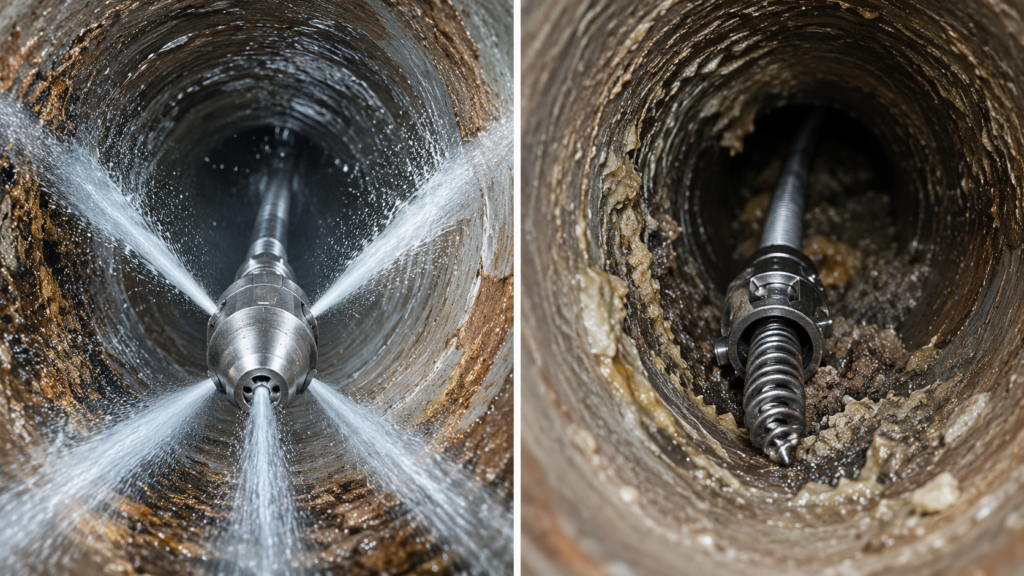
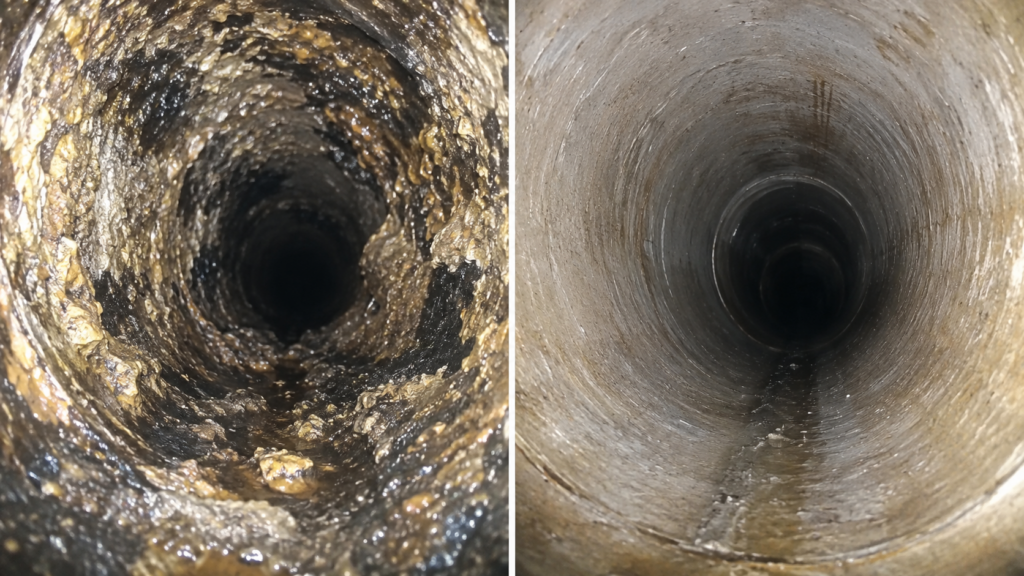
Hydro jetting is a high-pressure drain and sewer cleaning method that uses a specialized hose and directional nozzle to blast water through your pipes at pressures ranging from roughly 1,500 to 4,000 PSI. Rather than simply poking through a clog, the pressurized stream cuts through grease, scale, sludge, soap residue, and even invasive tree roots, then flushes the debris out of the line. The result is a pipe interior scoured close to its original diameter.
Here’s how it works in practice: a technician typically begins with a sewer camera video inspection to confirm the pipe’s material and condition. This step matters because hydro jetting is powerful, and pipes that are cracked, badly corroded, or made of fragile older material may not be good candidates. Once the line is cleared as safe, the jetting hose is fed into a cleanout, and the nozzle’s forward and rear jets simultaneously break up the blockage and propel the hose deeper while scrubbing the walls.
Typical hydro jetting costs in San Diego range from about $250 to $800 for residential work, with tougher jobs, longer lines, or heavy root intrusion sometimes reaching $1,000 or more. The price reflects the equipment, expertise, and the fact that you’re getting a thorough cleaning rather than a spot fix.
Core benefits include a deep, full-circumference clean, the ability to remove grease and roots that a cable simply slides past, and a longer interval before your next clog. Ideal use cases are recurring backups, kitchen lines packed with grease, commercial kitchens, and older San Diego homes in neighborhoods like North Park or Kensington where mature ficus and palm roots love to infiltrate clay and cast-iron sewer laterals.
Understanding Drain Snaking
Drain snaking, also called cabling or augering, is the traditional and time-tested method of clearing a clogged drain. It uses a flexible metal cable with a coiled auger or cutting head at the tip. The plumber feeds the cable into the drain, and as it advances it either breaks the clog apart or hooks onto the obstruction so it can be pulled back out. Hand-held augers handle small fixtures like sinks and tubs, while larger motorized machines tackle main lines.
The mechanism is fundamentally mechanical rather than hydraulic. When the auger head reaches the blockage, the plumber rotates the cable so the head can bore through hair, paper, soap clumps, or a foreign object. This restores flow by creating a channel through the clog. It’s fast, proven, and effective for the majority of everyday household blockages.
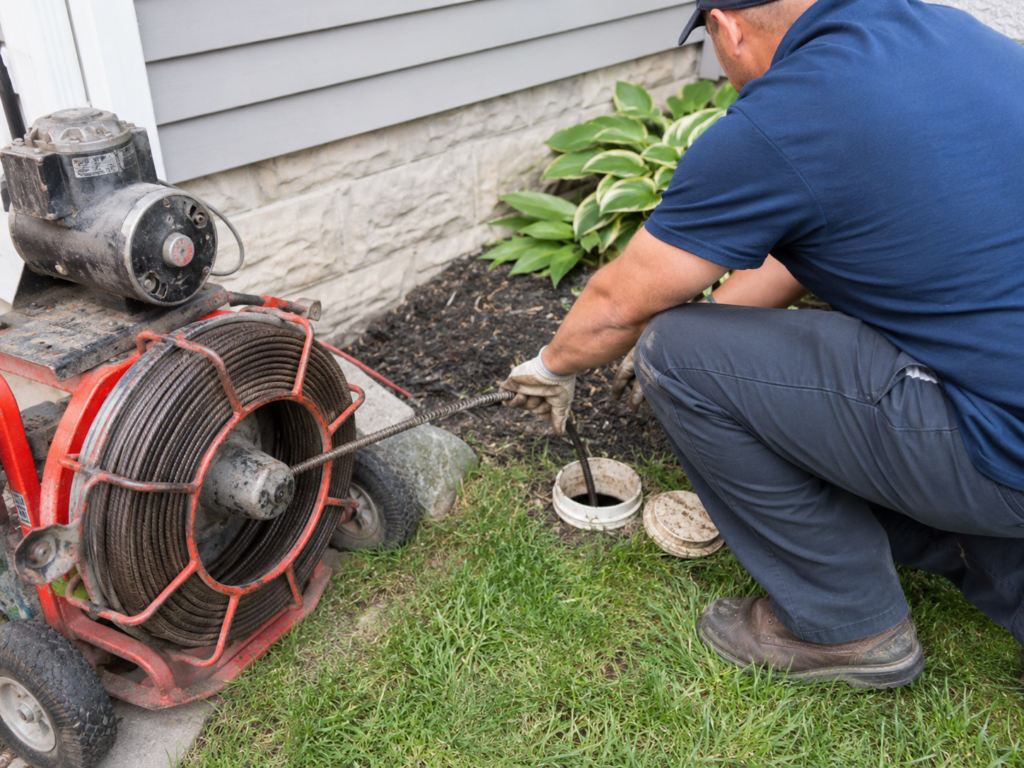
Typical drain snaking costs in San Diego are notably lower, generally falling between $100 and $275 for a standard residential service call, depending on the drain’s accessibility and the severity of the clog. That affordability is a big part of its appeal for routine problems.
Core benefits include low cost, speed, gentleness on older or more delicate pipes, and excellent results on simple, localized clogs. The ideal use cases are a single slow bathroom sink, a hair-clogged shower drain, a one-time toilet blockage, or a foreign object lodged near a fixture. For a San Diego renter or a homeowner facing a first-time, isolated backup, snaking is often the most sensible and economical starting point. If you’re not sure which drain is the culprit, a professional drain cleaning service can diagnose and clear it in one visit.
Pros and Cons Breakdown
Pros of Hydro Jetting
- Thorough, full-pipe cleaning: It removes buildup from the entire inner circumference, not just the center, so flow is restored to near-original capacity.
- Tackles grease and roots: High pressure cuts through greasy kitchen sludge and fine root hairs that a cable would slide right past.
- Longer-lasting results: Because the walls are scoured clean, it takes far longer for a new clog to form.
- Environmentally friendly: It uses only water, no harsh chemical drain cleaners that can harm pipes or the local watershed.
- Great for prevention: Ideal as scheduled maintenance for homes and businesses with a history of backups.
Cons of Hydro Jetting
- Higher upfront cost: The specialized equipment and expertise make it more expensive than snaking.
- Not for every pipe: Old, cracked, or corroded pipes may need a camera inspection first and could be damaged by high pressure.
- Overkill for minor clogs: Using it on a single slow sink is more power and cost than the job requires.
- Requires a professional: This is never a DIY method and needs trained, properly equipped technicians.
Pros of Drain Snaking
- Affordable: It’s the budget-friendly choice for a quick fix on a single problem drain.
- Fast and effective for simple clogs: Hair, paper, and soft obstructions clear quickly.
- Gentle on older pipes: The mechanical action is lower-risk for delicate or aging plumbing common in historic San Diego homes.
- Widely available: Nearly every plumber offers it, and minor versions are accessible to handy homeowners.
Cons of Drain Snaking
- Doesn’t clean pipe walls: It punches through the clog but leaves surrounding grease and scale in place.
- Clogs can return: Because buildup remains, the same drain may back up again before long.
- Struggles with grease and heavy roots: A cable often slips through grease or only partially clears root masses.
- Limited reach and scope: It’s best for localized blockages rather than whole-line cleaning.
Which Option Is Better? The Ultimate Showdown
The honest answer is that neither method is universally “better” — the right choice depends on the nature of your clog and your long-term goals, so let’s weigh cost against lasting value.
On pure upfront cost, drain snaking wins easily. If you have a single slow drain, a one-time toilet backup, or a hair clog in a shower, paying $250 or more for hydro jetting makes little sense. Snaking will clear it quickly and cheaply, and you’ll be back to normal the same day.
But cost-per-result tells a different story for recurring problems. If you find yourself calling a plumber to snake the same line every few months, you’re paying repeatedly for a temporary fix while the underlying buildup grows. In that scenario, a single hydro jetting service often costs less over a year or two than a string of snaking visits, and it solves the root cause rather than the symptom.
Choose drain snaking if your priority is a fast, low-cost fix for a simple, isolated clog, or if your pipes are old and fragile. Go with hydro jetting if you’re dealing with repeat backups, grease-laden kitchen lines, tree-root intrusion, or you want a preventive deep clean that buys you years of trouble-free flow.
San Diego’s specific conditions tip the scale toward hydro jetting more often than you might expect. The region’s hard, mineral-rich water encourages scale to accumulate on pipe walls, and the year-round mild climate means tree roots never go fully dormant — they keep seeking out sewer laterals through tiny joints and cracks. For older properties in areas like South Park or Golden Hill with original clay or cast-iron lines, the deep-clean power of jetting is frequently the more economical long-term investment. A hydrojet plumbing specialist can confirm whether your line is a good candidate. For severe structural damage beyond cleaning, you may instead need trenchless sewer repair.
Get Expert Help in San Diego
Still unsure which approach fits your situation? You don’t have to guess. The most reliable way to decide between hydro jetting and drain snaking is to let a licensed professional inspect your line and recommend the right method for your pipes, your budget, and your San Diego home.
Whether you need a quick clog cleared or a full-line deep clean, our team is here to help homeowners and businesses across San Diego County. We’re happy to walk you through your options, explain the costs clearly, and never push a service you don’t need.
Explore our drain cleaning services or learn more about general plumbing in San Diego. For recurring or commercial-grade issues, our sewer and gas line services team can diagnose the bigger picture, and our property management plumbing solutions keep multi-unit buildings flowing. If a hidden leak is part of the problem, our leak detection experts can pinpoint it fast.
Conclusion & Recommendation
When comparing hydro jetting vs drain snaking, the smartest decision comes down to matching the tool to the problem. For a simple, one-time clog, drain snaking is the affordable, fast, and gentle choice. For recurring backups, grease, roots, or any situation where you want a thorough, long-lasting clean, hydro jetting is the clear winner and often the better value over time. Given San Diego’s hard water and active root growth, many local homeowners find that a periodic hydro jetting service is the most cost-effective way to keep their plumbing healthy. When in doubt, start with a camera inspection so your plumber can recommend exactly what your pipes need.
Frequently Asked Questions
1. Is hydro jetting better than snaking for tree roots?
1. Is hydro jetting better than snaking for tree roots?
Yes. Hydro jetting’s high-pressure water cuts through and flushes out fine root hairs and root masses far more completely than a snake, which often only bores a small channel through the roots. In root-prone San Diego neighborhoods, jetting typically delivers a longer-lasting result, though severely root-damaged pipes may need repair as well.
2. Can hydro jetting damage my pipes?
2. Can hydro jetting damage my pipes?
It can if the pipes are already cracked, severely corroded, or made of fragile older material. That’s why reputable plumbers run a camera inspection first to confirm the line can safely handle the pressure. On sound pipes, hydro jetting is safe and effective.
3. How much does drain snaking cost in San Diego?
3. How much does drain snaking cost in San Diego?
A standard residential drain snaking service in San Diego generally runs between $100 and $275, depending on the drain’s accessibility and the severity of the clog. Main-line or hard-to-reach clogs sit at the higher end.
4. How often should I get my drains hydro jetted?
4. How often should I get my drains hydro jetted?
For most homes, every 18 to 24 months is a reasonable preventive interval, but properties with heavy grease use, large trees, or a history of backups may benefit from annual service. A plumber can recommend a schedule based on your specific line.
5. Why does my drain keep clogging even after snaking?
5. Why does my drain keep clogging even after snaking?
Snaking clears a path through the clog but leaves the surrounding grease, scale, and buildup on the pipe walls. That residue catches new debris, so the clog returns. Hydro jetting removes the buildup itself, which is why it prevents repeat clogs more effectively.
6. Is hydro jetting safe for older San Diego homes?
6. Is hydro jetting safe for older San Diego homes?
It can be, but caution is essential. Many older San Diego homes have clay or cast-iron pipes that may be compromised. A pre-jetting camera inspection determines whether the line is strong enough; if not, snaking or pipe repair may be the safer route.
7. Can I rent a hydro jetter and do it myself?
7. Can I rent a hydro jetter and do it myself?
This isn’t recommended. Hydro jetting at full pressure requires training to avoid injury and pipe damage, and consumer-grade machines lack the power and nozzles for a proper clean. It’s a job for licensed professionals.
8. Which method is more eco-friendly?
8. Which method is more eco-friendly?
Hydro jetting is generally the greener option because it uses only pressurized water, avoiding the harsh chemical drain cleaners that can corrode pipes and end up in San Diego’s storm and watershed systems.