
- Home
- Mold Damage Restoration
- Mold Testing
Mold testing · San Diego County
Mold Testing in San Diego
What mold testing is, when it is worth doing, what a result can and cannot tell you — and why the moisture behind the mold still has to be found and fixed.
- ✓Family owned & operated
- ✓Licensed, bonded & insured
- ✓Free estimates
- ✓1-year warranty on our work
Worried about mold?
Tell us what plumbing problem you’re dealing with — what you are seeing or smelling, where, and any leak or water damage you know of.
Water moving right now? Call (858) 251-7070
The short answer
What is mold testing?
Mold testing collects samples of the air or of surfaces in a building and has them analyzed by a laboratory to find out whether mold is present, what kinds, and how much compared with the air outside. It is most useful when mold is suspected but cannot be seen, when someone in the building has health concerns, during a sale, or to confirm a cleanup worked. Testing identifies mold; it does not fix it. For homes and businesses across San Diego County, HomePro Plumbing & Drains handles the part that stops mold coming back — finding and repairing the leak or moisture source.
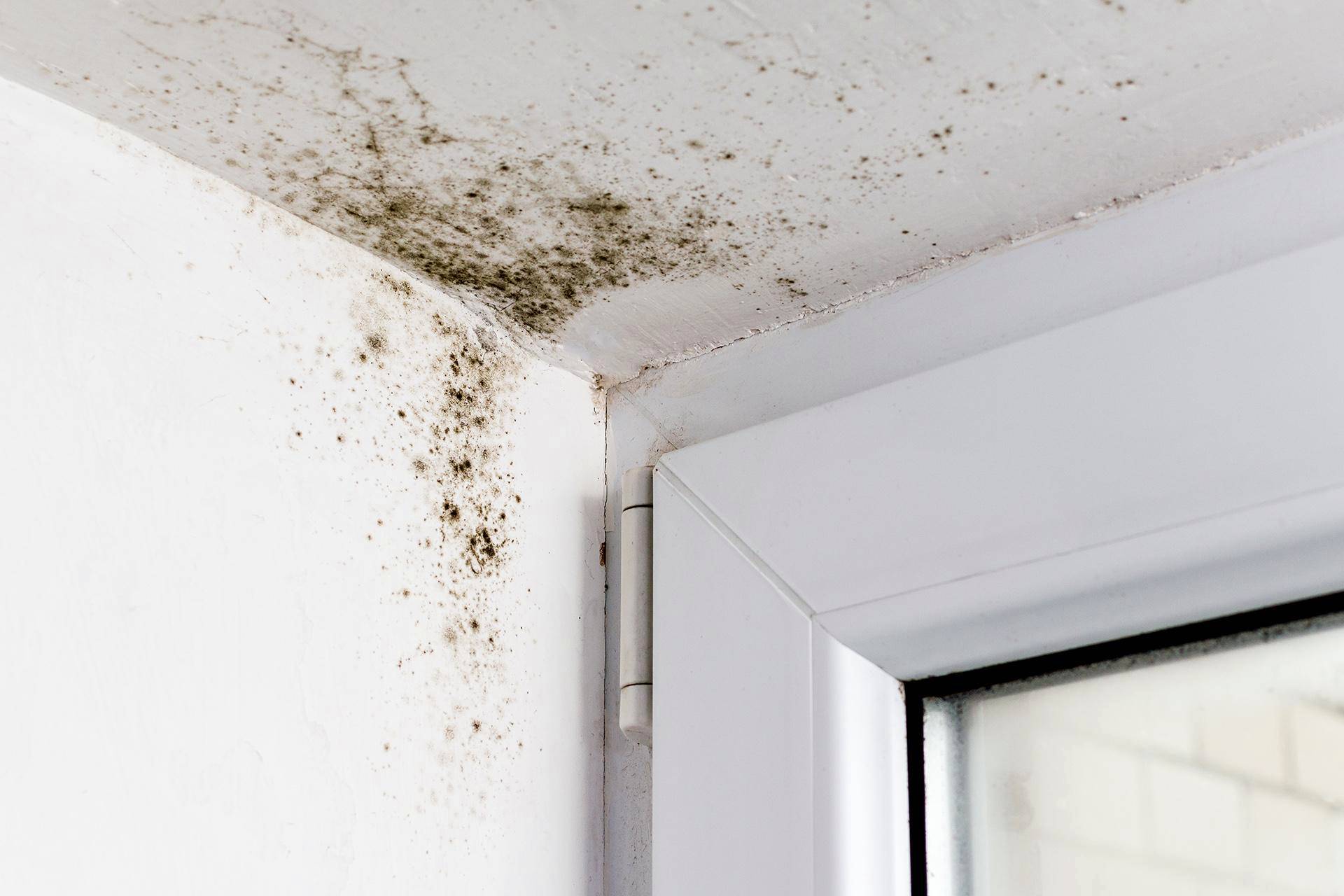
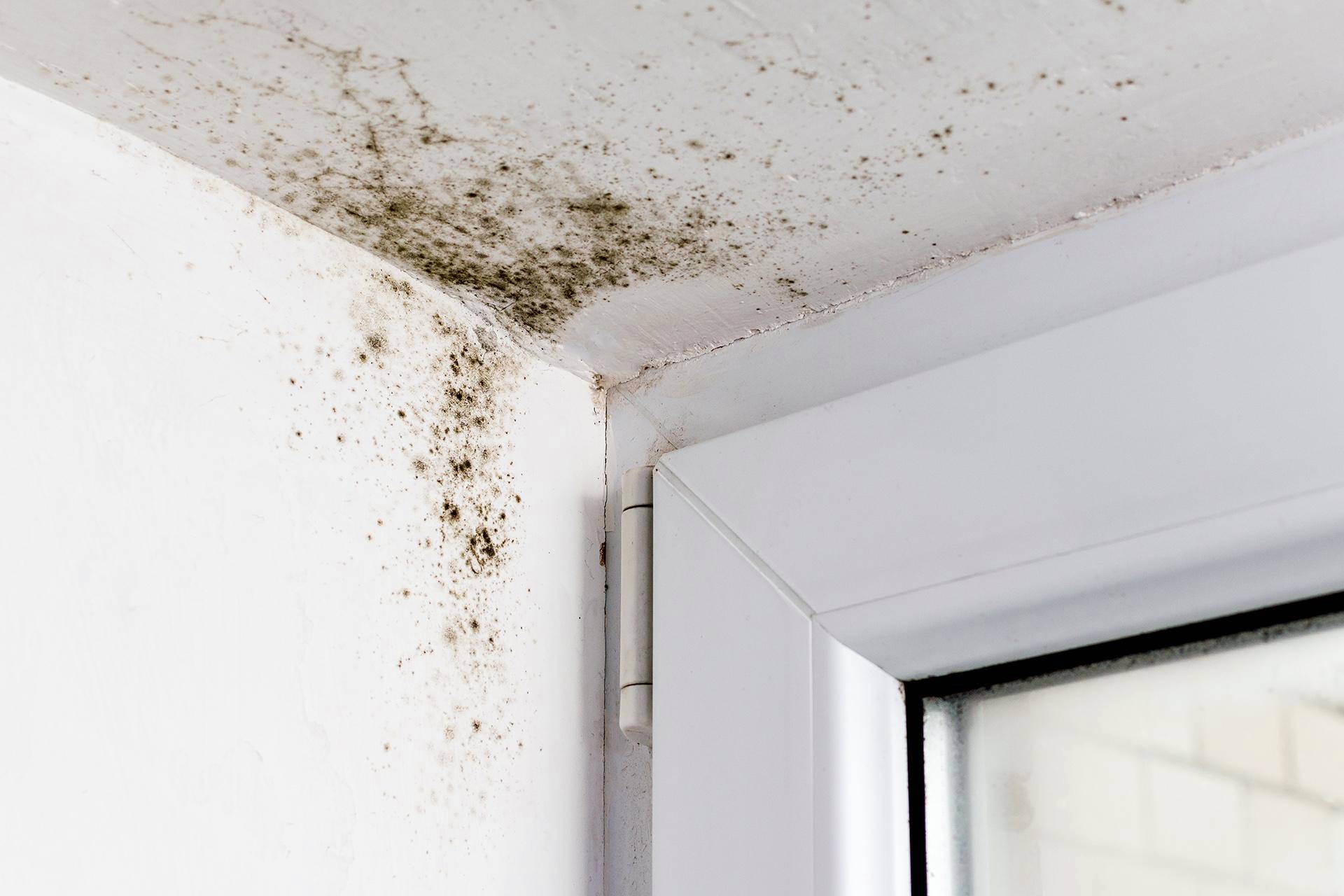
Mold and mildew can grow anywhere, but they spread fastest in damp places with poor ventilation, or on wet surfaces that were never completely dried. Well-sealed modern buildings, where outside air cannot easily get in, can make that worse. Because mold often grows behind drywall or beneath floor coverings, it can go unnoticed — sometimes all you get is a musty smell.
Mold testing and mold inspection are different: an inspection evaluates the property; testing analyzes samples. See mold damage restoration for what happens when mold is found.
Testing can help answer
- Is mold present where you cannot see it?
- Which types of mold are there?
- How much compared with outdoor air?
- Is growth active?
- Did a cleanup work?
- Are allergens or particles a concern?
When testing is considered
When mold testing can help.
A musty smell, no visible mold
Mold may be growing behind walls or under floors.
After a leak or water damage
To check whether mold followed the water.
Health concerns
Allergies, sensitivities or unexplained symptoms indoors.
Buying or selling
An evaluation during a real-estate transaction.
After a cleanup
A clearance test to confirm the growth is gone.
Workplaces and classrooms
Checking the air where people spend long hours.
If mold is already visible and the moisture source is known, fixing the moisture and dealing with the growth usually comes before any test.

How mold testing works
Look, measure, sample, analyze.
A typical mold evaluation follows these steps. The moisture readings are where plumbing comes in: HomePro locates wet materials and the leak behind them.
- 1
Non-intrusive evaluation
A visual check for mold growth and moisture, with the property’s history — including whether rooms have exterior walls.
- 2
Moisture and humidity readings
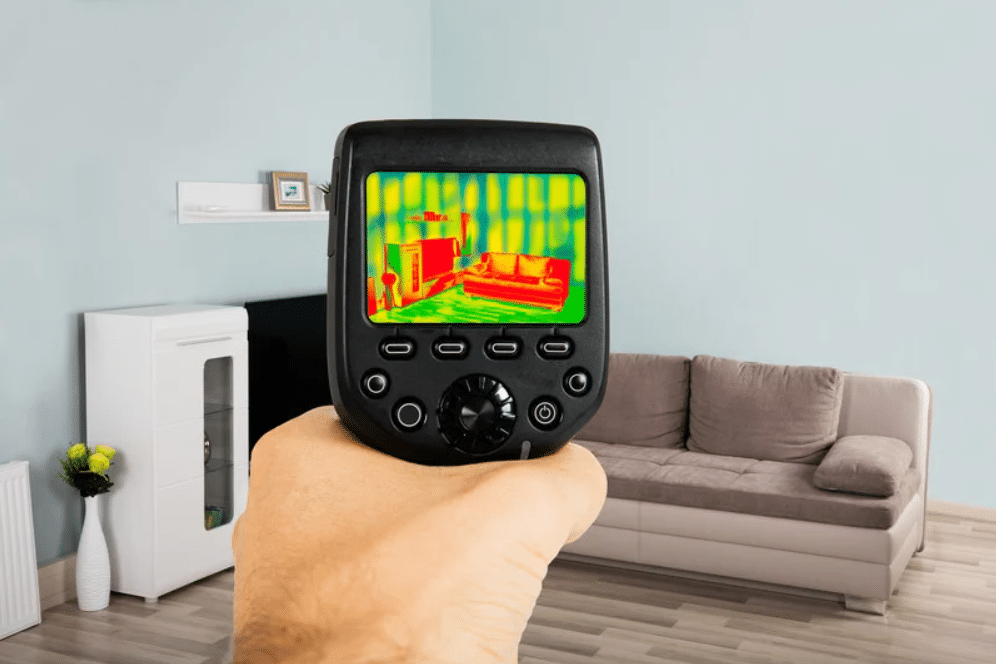
A moisture meter and thermal imaging find actively wet materials; a temperature and humidity meter measures relative humidity.
- 3
Sampling, if recommended
Air samples (spore traps) and surface samples (swabs, tape or bulk). An outdoor air sample is taken as a baseline.
- 4
Laboratory analysis and next steps
A laboratory analyzes the samples, and the results guide what needs fixing, cleaning or removing.
Types of analysis
What a laboratory can look for.
These are laboratory methods. Which ones, if any, make sense depends on the property and the question you need answered.
| Question | What it measures |
|---|---|
| Air sample (spore trap) | Identifies the types of fungal spores present and counts spores per cubic meter of air; also reports background debris, dander, fibers and pollen |
| Direct surface sample | Identifies fungal spores and growth structures on a surface, with a semi-quantitative result |
| MSQPCR / ERMI | MSQPCR (mold-specific quantitative PCR) is a DNA-based method that measures 36 molds; ERMI uses it to produce an index number compared with reference homes |
| Allergen and particle analysis | Pollen (trees, grasses, other plants), animal and bird dander, cellulose, glass and synthetic fibers, and hyphal fragments — a sign of active mold growth |
| VOC screening | Volatile organic compounds in the air, released by building materials, adhesives and mold itself |
An outdoor air sample is normally taken alongside indoor air samples so the results can be compared.
In more detail
Testing, inspection and what comes after.
Testing vs. inspection
A mold inspection evaluates the property — where there is visible or hidden mold, and what moisture conditions are allowing it. Testing collects samples and analyzes them to identify what is there and how much. An inspection often comes first and decides whether testing is needed at all.
After testing
A result names the problem; it does not fix it. If mold is confirmed, the next steps are finding and repairing the moisture source, drying the area, and cleaning or removing affected materials. A clearance test afterwards can confirm the cleanup worked. See mold damage restoration.
Why VOCs come up
Volatile organic compounds are carbon-based chemicals that evaporate at room temperature. Building materials release them, and adhesives used in carpet, vinyl and laminate flooring, cabinets and countertops can “off-gas” for years. Mold also produces VOCs, which is part of the musty smell. Higher concentrations are linked to health complaints, and even small amounts of some compounds cause odors or reactions.
Where hidden mold comes from
Common sources are dripping pipes, a dirty or damaged furnace or air conditioner, and groundwater seeping into basements and other damp spaces. Each one is a moisture problem first — see leak detection and moisture and leak detection.
Why HomePro
The test names it. The fix is the water.
HomePro Plumbing & Drains is a family-owned San Diego plumbing company — licensed, bonded and insured. Whatever a mold test shows, the growth returns while the moisture does. We find the leak or moisture source with moisture meters and infrared imaging, repair it, and explain what we found and what it will cost before work starts.
- ✓Family owned and operated
- ✓Licensed, bonded and insured
- ✓The moisture source found before anything is opened
- ✓Free estimates before work begins
- ✓One-year warranty on all of our work
- ✓Financing options available
HomePro at a glance
locally
our work
work begins
coverage
When to call a plumber
Test first, or fix the water first?
Call about the water now if
- Water is actively leaking into a wall, ceiling or floor
- A ceiling is stained and sagging
- Flood water or sewage has soaked into the building
Call (858) 251-7070 — the phone is always faster than a form for anything active.
Testing may help if
- There is a musty smell but no visible mold
- Someone has symptoms that ease away from the building
- You are buying or selling a property
- You want to confirm a cleanup worked
Use the service request form or schedule service — estimates are free.
Google reviews
What customers say after a HomePro visit.


Reviews from HomePro’s Google Business Profile. See all reviews on Google
Related services
Related mold and moisture pages.

Restoration
Mold Inspection
Evaluating a property for visible and hidden mold and the moisture behind it.
Mold inspection →
Restoration
Mold Damage Restoration
What mold damage restoration involves — and fixing the moisture behind it.
Mold restoration →
Restoration
Moisture & Leak Detection
Moisture meters and infrared find hidden water and mold risk.
Moisture & leak detection →
Leaks
Moisture Detection
Measuring how far water has spread into floors, walls and building materials.
Moisture detection →
Leaks
Infrared Leak Detection
Infrared cameras spot hidden wet areas without cutting into walls or floors.
Infrared detection →
Leaks
Leak Repair
Once the leak is found, the damaged pipe or fitting is repaired properly.
Leak repair →Service area
Finding the moisture behind mold, across San Diego County.
HomePro Plumbing & Drains provides leak detection, leak repair and water damage cleanup for homes and businesses throughout San Diego County from its shop at 8910 Activity Rd Suite C, San Diego, CA 92126.
- University City →
- North Clairemont →
- Tierrasanta →
- Pacific Beach →
- Allied Gardens →
- La Mesa →
- Mission Beach →
- Chula Vista →
Not sure we cover you? Call (858) 251-7070.
Mold testing questions
Mold testing, answered.
Straight answers to what San Diego customers ask before booking.
What is mold testing?
Collecting samples of the air or of surfaces and having a laboratory analyze them to find out whether mold is present, what kinds, and how much compared with outdoor air.
Do I need mold testing?
Not always. If mold is visible and the moisture source is known, fixing the moisture and dealing with the growth usually comes first. Testing helps most when mold is suspected but not visible, when there are health concerns, during a sale, or to confirm a cleanup.
What is the difference between mold testing and mold inspection?
An inspection evaluates the property for visible and hidden mold and the moisture conditions behind it. Testing collects samples for laboratory analysis to identify what is there and how much.
What are ERMI and MSQPCR?
MSQPCR (mold-specific quantitative PCR) is a DNA-based laboratory method that measures 36 molds. ERMI uses those measurements to produce an index number compared with reference homes.
Why is an outdoor air sample taken?
Mold spores are always present outdoors. An outdoor sample gives a baseline, so indoor results can be compared with it.
What happens after mold testing?
If mold is confirmed, the moisture source is found and repaired, the area is dried, and affected materials are cleaned or removed. HomePro handles the leak and the drying — call (858) 251-7070.
Request service
Something musty
you can’t find?
Tell us what you are noticing. HomePro will follow up to find the moisture behind it and give you a free estimate.
- Phone(858) 251-7070
- Emailinfo@homeproplumbingsd.com
- Shop8910 Activity Rd Suite C
San Diego, CA 92126 - Backed byFree estimates · One-year warranty on our work · Financing options available
Prefer to write it down? Use the service request form at the top of this page.
