



When a sewer line fails, the last thing most property owners want is a backhoe tearing up the lawn, driveway, or parking lot. Trenchless sewer repair San Diego offers a way to fix or replace a damaged sewer line with little to no excavation — preserving your landscaping, hardscape, and daily routine. At HomePro Plumbing and Drains, we help homeowners, renters, and commercial property owners across San Diego diagnose sewer problems accurately and repair them with methods designed to be faster and far less disruptive than traditional dig-and-replace.
If you’re dealing with recurring backups, slow drains throughout the building, or a sewer line that keeps failing inspections, this page explains how trenchless repair works, when it makes sense, and what to expect. For a broader primer, our homeowner’s guide to trenchless sewer repair San Diego walks through the fundamentals.
Why Trenchless Sewer Repair Matters in San Diego
A failing sewer line rarely fixes itself, and the longer it’s ignored, the more it tends to cost. A cracked or root-invaded pipe can lead to repeated backups, foul odors, soggy patches in the yard, and — in worse cases — sewage backing up into the lowest fixtures in the building. If you’ve noticed backups that come and go, it helps to understand why sewer lines back up unexpectedly. For commercial property owners, that can mean closures, health-code concerns, and unhappy tenants.
Traditional repair has historically meant open-trench excavation: digging a long trench along the path of the pipe, replacing it, and then restoring everything that was torn up. That restoration — concrete, pavers, mature landscaping, irrigation lines — is often where the real cost and time pile up.
Trenchless methods change that equation. By accessing the line through one or two small points instead of a continuous trench, the disruption to your property is dramatically reduced in most cases. For many San Diego properties — especially those with finished driveways, mature trees, or limited yard access — that’s the difference between a multi-day teardown and a focused, contained repair.
Common Problems Trenchless Sewer Repair Solves
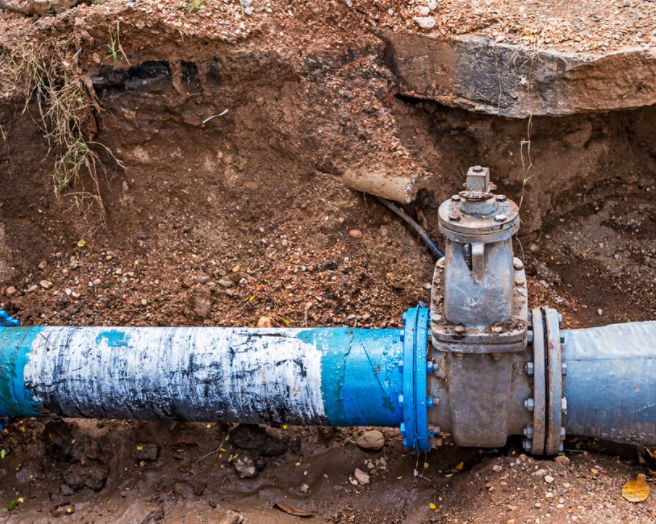
Trenchless repair isn’t right for every situation, but it addresses many of the most common sewer-line failures we see across San Diego. Our comprehensive guide to sewer repair in San Diego digs deeper into each of these, but here are the issues trenchless most often solves:
- Tree root intrusion. San Diego’s mature ficus, palm, and other established trees send roots toward the moisture and nutrients inside sewer lines. Roots work into joints and cracks, eventually choking or breaking the pipe. Trenchless epoxy pipe lining can seal the pipe against future intrusion.
- Cracked, offset, or collapsed pipe. Ground movement, age, and shifting soils can crack or misalign pipe sections. Depending on severity, lining or pipe bursting may restore the line, or it may call for targeted sewer line leak repair.
- Corroded cast iron or deteriorated clay pipe. Many older San Diego homes still have cast iron or vitrified clay sewer laterals that corrode, scale, or crack over decades, sometimes alongside broader issues we cover under water, sewer, and gas line services.
- Bellied or sagging lines. A low spot where waste and water collect causes repeated clogs. This often needs assessment to confirm whether trenchless is appropriate.
- Failed Orangeburg or older bitumen-fiber pipe. Found in some mid-century properties, this material degrades and deforms over time.
- Recurring backups despite repeated drain cleaning. If drain cleaning, snaking, or hydro jetting only buys you a few weeks, the underlying pipe is often the problem — not just the clog.
How Trenchless Sewer Repair Works
We keep our process clear so you know exactly what’s happening at each stage and why.
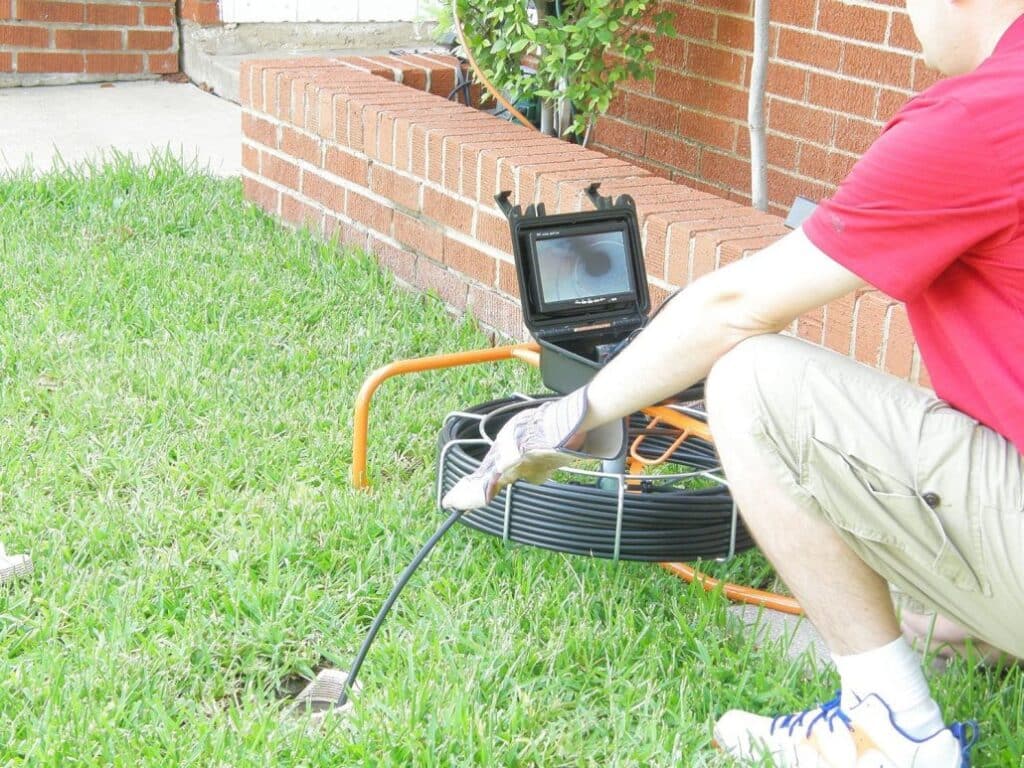
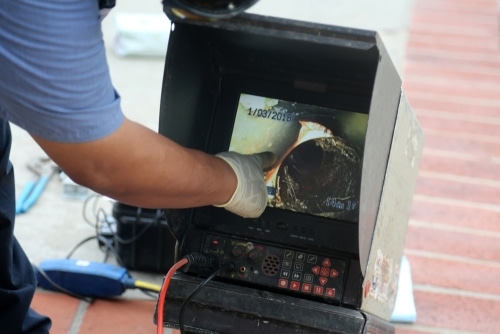
1. Inspection and diagnosis. We start with a sewer camera video inspection of the line to locate the damage, measure its depth, and confirm the cause. This footage tells us whether the line is a candidate for trenchless repair or whether traditional excavation is the better call. You see what we see.
2. Cleaning the line. Before any repair, the pipe usually needs to be cleared of roots, scale, and debris — often with hydrojet plumbing — so the repair bonds properly and the camera reading is accurate.
3. Choosing the method. Based on the line’s condition, we recommend one of the common trenchless approaches:
- Pipe lining (cured-in-place pipe, or CIPP): A resin-saturated liner is inserted into the existing pipe and cured in place, forming a new pipe inside the old one. Best when the host pipe is still structurally intact enough to host a liner.
- Pipe bursting: A new pipe is pulled through the path of the old one while a bursting head fractures the old pipe outward. Useful when the existing line is too collapsed or undersized to line.
4. The repair. We complete the lining or bursting through access points rather than a full trench, then verify the work.
5. Final camera verification. We run the camera again so you can confirm the line is clear, continuous, and properly restored before we close up.
Because the right method depends on what the camera reveals, we don’t quote a one-size-fits-all solution — we diagnose first, then recommend.
Why Choose HomePro Plumbing and Drains
San Diego property owners choose HomePro Plumbing and Drains because we treat a sewer problem as a diagnosis to get right, not a sale to push. A few things that set our work apart:
- Camera-first approach. We don’t guess. Every trenchless recommendation starts with inspection footage so you understand the problem before approving any work.
- Honest method selection. Trenchless is excellent in the right scenario — and we’ll tell you plainly when traditional excavation is actually the smarter, more durable fix for your situation.
- Local experience. We work on San Diego’s mix of older laterals, slab foundations, hillside lots, and tight-access properties, so we’re familiar with the conditions you’re dealing with.
- Clean, contained jobs. Less digging means less mess, faster restoration, and a property that goes back to normal sooner.
- Clear communication. You’ll know what we found, what we recommend, and why — before we start.
Trenchless Sewer Repair Across San Diego and Nearby Areas
Our shop sits at 8910 Activity Rd Ste C in San Diego, which keeps us well-positioned to serve the city and the communities around it. We regularly handle sewer line work in neighborhoods near our base — Mira Mesa, Scripps Ranch, Clairemont, Kearny Mesa, Tierrasanta, Sorrento Valley, and surrounding San Diego areas — as well as throughout the broader city.
San Diego’s housing stock and terrain make sewer issues especially common in certain pockets. Older neighborhoods often still rely on clay or cast iron laterals that have aged past their reliable lifespan. Mature street trees push aggressive roots toward sewer joints. Hillside and canyon-edge lots can put lines under stress from soil movement. And many properties have finished driveways, decorative concrete, or established landscaping that owners understandably want to protect — exactly the situations where trenchless methods shine.
For commercial and multi-unit properties, minimizing downtime matters as much as the repair itself. Trenchless work that avoids closing off a parking lot or walkway for days can keep a business running while the line gets fixed — and our property management support helps owners and managers keep recurring sewer issues under control across a portfolio.
Cost, Timeline, and What to Expect
Every sewer line is different, so we avoid quoting a flat number sight unseen. Several factors influence the price, scope, and timeline of a trenchless repair, including:
- The length and depth of the affected line
- The repair method required (lining vs. bursting)
- The condition of the existing pipe and how much cleaning it needs first
- Access points available and any permitting required for your property
- Whether the line ties into city sewer or a septic system
In general, trenchless repairs are completed in a much shorter window than full-trench replacements, and many straightforward jobs are finished in a day or so once the line is cleaned and the method is set — though more complex or deeper lines take longer. Because the goal of trenchless is to avoid tearing up and rebuilding your property, the total cost picture often compares favorably to traditional excavation once restoration is factored in.
The most reliable way to understand your specific cost and timeline is a camera inspection. Once we see the line, we can give you a clear, honest recommendation and estimate.
Stop Patching the Problem — Fix the Line
If your sewer keeps backing up, drains throughout your San Diego property are slow, or a line keeps failing inspection, waiting only raises the cost. Trenchless sewer repair San Diego lets us fix the problem with less digging, less mess, and less downtime — and it starts with a clear diagnosis, not a guess.
Call HomePro Plumbing and Drains at (858) 251-7070 to schedule a sewer camera inspection, or email info@homeproplumbingsd.com to request a quote. We’ll show you exactly what’s wrong, explain your options honestly, and recommend the right repair for your property — whether that’s trenchless or traditional.
Call (858) 251-7070 now and get your sewer line diagnosed by a team that fixes it right the first time.
Frequently Asked Questions
What is trenchless sewer repair?
What is trenchless sewer repair?
Trenchless sewer repair is a method of fixing or replacing a damaged sewer line without digging a long trench along its entire path. Instead, technicians access the line through one or two small points and either line the existing pipe with a cured-in-place liner or pull a new pipe through using pipe bursting. The result is a restored sewer line with far less disruption to landscaping, driveways, and concrete than traditional open-trench excavation.
How much does trenchless sewer repair cost in San Diego?
How much does trenchless sewer repair cost in San Diego?
Cost depends on the length and depth of the line, the repair method needed, the pipe’s condition, available access points, and any required permits. Because every sewer line is different, we don’t quote a flat price without seeing the line first. A camera inspection lets us identify the actual problem and give you an accurate, honest estimate rather than a guess. Trenchless often compares well to traditional digging once landscaping and hardscape restoration costs are included.
Is trenchless sewer repair better than traditional digging?
Is trenchless sewer repair better than traditional digging?
It depends on your line’s condition. Trenchless is excellent when the host pipe can be lined or burst, since it avoids extensive excavation, protects landscaping and concrete, and is usually faster to complete. Traditional excavation is sometimes the better, more durable choice — for severely collapsed lines, certain layouts, or when the pipe needs full replacement. We run a camera inspection first and recommend whichever method actually fits your situation, not a default answer.
Will trenchless sewer repair damage my yard or driveway?
Will trenchless sewer repair damage my yard or driveway?
Minimizing surface damage is the entire point of trenchless methods. Instead of a continuous trench, the work is done through small access points, so mature landscaping, decorative concrete, pavers, and driveways are typically left intact in most cases. Some access digging is usually still required at entry points, but it’s far more contained than full-trench replacement. This is one of the biggest reasons San Diego property owners with finished yards choose trenchless when it’s a viable option.
How do I know if I need sewer repair?
How do I know if I need sewer repair?
Common warning signs include recurring drain backups across multiple fixtures, slow drains throughout the building, gurgling toilets, foul sewage odors indoors or in the yard, soggy or unusually green patches over the sewer line, and clogs that return shortly after cleaning. If snaking or hydro jetting only helps temporarily, the pipe itself is often the issue. A sewer camera inspection is the most reliable way to confirm whether you need repair and what’s causing the problem.
How long does trenchless sewer repair take?
How long does trenchless sewer repair take?
Many straightforward trenchless repairs are completed in roughly a day once the line has been inspected, cleaned, and the method confirmed — significantly faster than traditional excavation, which can run several days including restoration. More complex jobs, deeper lines, longer runs, or repairs that require permitting can take longer. After a camera inspection, we can give you a realistic timeline for your specific line rather than a general estimate.
Does trenchless sewer repair work for older homes in San Diego?
Does trenchless sewer repair work for older homes in San Diego?
Often, yes. Many older San Diego homes have clay, cast iron, or even Orangeburg laterals that are prime candidates for trenchless lining or pipe bursting. The deciding factor is the pipe’s current condition, which we confirm with a camera inspection. In some cases an older line is too far deteriorated or collapsed to line and needs replacement instead — pipe bursting can frequently still be done trenchlessly even then.
Is trenchless sewer repair worth it?
Is trenchless sewer repair worth it?
For many property owners, yes — especially when the alternative means tearing up a finished driveway, mature landscaping, or decorative concrete and rebuilding it afterward. Trenchless repair is typically faster and less disruptive, and the lined or replaced pipe is built to last. The honest answer for your property comes down to your line’s condition, which a camera inspection reveals. We’ll tell you plainly whether trenchless is the right call or whether traditional repair serves you better.