



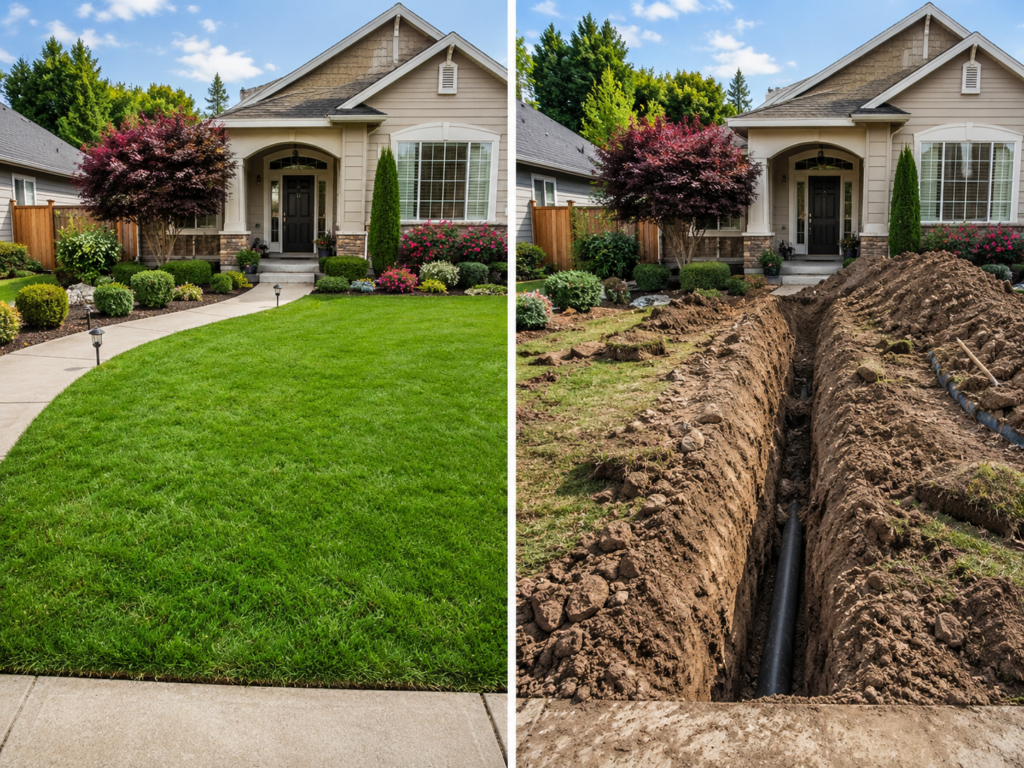
 For most San Diego homeowners, trenchless sewer repair is the better choice when the existing pipe is structurally intact enough to be relined or burst-replaced, because it costs less in total disruption, preserves landscaping and hardscape, and finishes in a day or two. Choose traditional sewer replacement only when the line is fully collapsed, severely misaligned, or needs rerouting, since digging is the only way to fix those conditions. Trenchless wins on speed and surface preservation; traditional wins on flexibility for the worst-case pipe failures. The right answer depends entirely on the condition of your specific line, which is why a camera inspection comes first.
Understanding Trenchless Sewer Repair
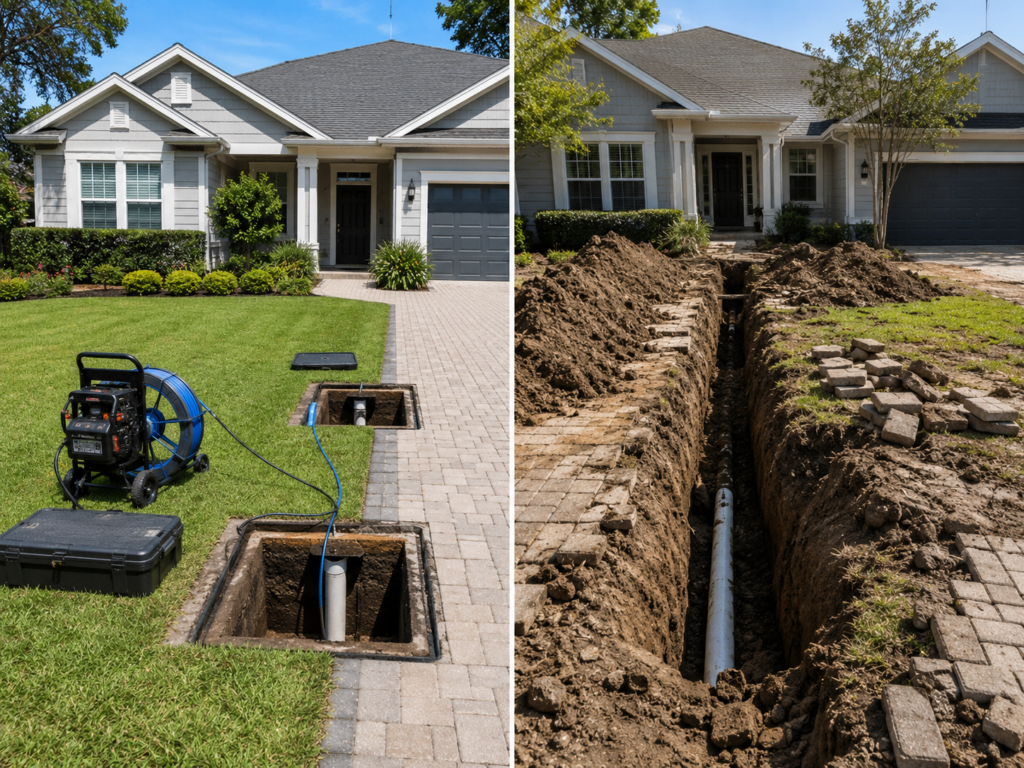
Trenchless sewer repair fixes or replaces an underground sewer line without excavating the entire length of the pipe. Instead of digging a long trench, technicians work through one or two small access points, which means your driveway, patio, and lawn stay largely intact.
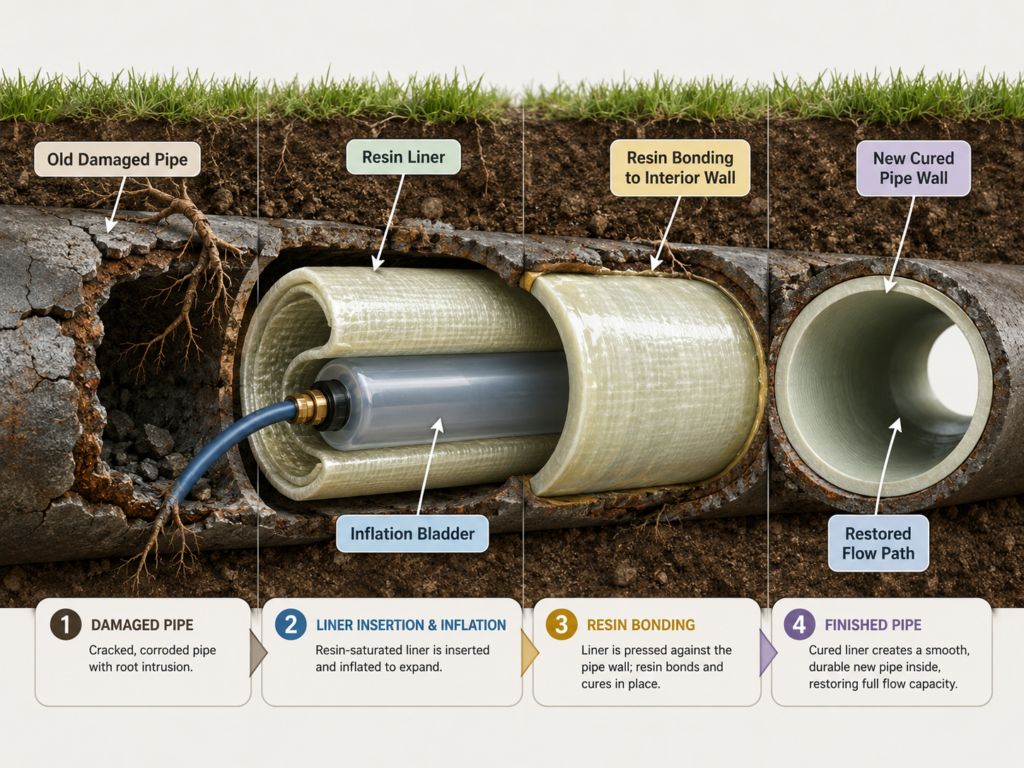
There are two primary trenchless methods. Cured-in-place pipe (CIPP) lining inserts a resin-saturated felt or fiberglass liner into the existing pipe, then inflates and cures it to form a new, seamless pipe within the old one. Pipe bursting pulls a new HDPE pipe through the path of the old line while a bursting head fractures and pushes the old pipe outward into the surrounding soil. Lining is ideal when the host pipe still holds its shape; bursting is used when you need a fully new pipe and want to maintain or increase the original diameter.
In San Diego, trenchless typically runs $80 to $250 per linear foot, with most residential jobs landing between $6,000 and $15,000 depending on length, depth, and access. The core benefits are speed (many jobs finish in one to two days), minimal surface destruction, and a finished product that often carries a 50-year material lifespan. Ideal use cases include lines damaged by root intrusion, corrosion, small cracks, or minor offset joints — common in San Diego’s older neighborhoods like North Park, Kensington, and parts of La Jolla where mature trees and decades-old clay pipe coexist.
Understanding Traditional Sewer Replacement
Traditional sewer replacement is the conventional “dig and replace” method, where crews excavate a trench along the full path of the failed sewer line, remove the old pipe entirely, lay new pipe, and then backfill and restore the surface. It is the oldest and most universally applicable approach because it gives the crew direct, hands-on access to every foot of the line.
The process starts with locating and exposing the pipe, often requiring heavy equipment like a mini-excavator. Once the trench is open, the old pipe is removed, a new pipe (typically PVC or ABS) is installed on a properly graded and compacted bed, and the trench is backfilled in lifts. Surface restoration — replacing concrete, pavers, sod, or asphalt — is a separate and frequently underestimated cost.
In San Diego, traditional replacement commonly runs $50 to $200 per linear foot for the dig itself, but total project costs frequently reach $8,000 to $30,000 or more once restoration, permits, and any concrete or hardscape removal are factored in. Deeper lines and runs beneath driveways or city sidewalks push costs higher. The core benefit is total flexibility: a crew can reroute a line, correct severe sagging (“bellies”), fix a fully collapsed pipe, or replace a section that has completely separated. Ideal use cases include catastrophic pipe failure, major misalignment, or situations where the homeowner wants to change the line’s path or grade.
| Attribute | Trenchless Sewer Repair | Traditional Sewer Replacement |
|---|---|---|
| Typical Upfront Cost | $6,000–$15,000 (often lower net cost) | $8,000–$30,000+ (with restoration) |
| Project Duration | 1–2 days | 3–7+ days |
| Surface Disruption | Minimal (1–2 small access pits) | Extensive (full-length trench) |
| Pipe Lifespan | ~50 years (HDPE/CIPP) | ~50–100 years (PVC) |
| Landscape/Hardscape Damage | Very low | High; restoration often extra |
| Best For | Cracks, roots, corrosion, intact host pipe | Collapse, severe sagging, rerouting |
| Diameter Flexibility | Same or slightly increased (bursting) | Fully customizable |
Pros and Cons Breakdown
Pros of Trenchless Sewer Repair
- Preserves your property: No long trench means your San Diego landscaping, mature trees, driveway, and patio usually stay untouched.
- Faster turnaround: Most jobs finish in a day or two, minimizing the time your household is without normal sewer service.
- Lower restoration costs: Because there’s little surface damage, you avoid expensive concrete and hardscape rebuilds.
- Durable result: Seamless, jointless liners and HDPE pipe resist future root intrusion and corrosion.
Cons of Trenchless Sewer Repair
- Not always possible: A fully collapsed or badly misaligned pipe can’t be lined and may not be burstable.
- Higher per-foot equipment cost: The specialized gear means a higher base rate, even if total cost is often lower.
- Slight diameter reduction with lining: CIPP reduces interior diameter marginally, though rarely enough to matter for residential flow.
Pros of Traditional Sewer Replacement
- Works in every scenario: Even a completely failed or collapsed line can be dug up and replaced.
- Full flexibility: Crews can reroute, re-grade, or resize the line however the property requires.
- Direct verification: The pipe is fully exposed, so the crew can confirm condition along the entire run.
Cons of Traditional Sewer Replacement
- Major disruption: Trenching can tear up lawns, driveways, and patios — a real concern for San Diego homes with established xeriscaping or decorative hardscape.
- Longer timeline: Excavation, installation, and restoration can stretch across a week or more.
- Hidden restoration costs: Replacing concrete, pavers, or mature landscaping often rivals the cost of the plumbing work itself.
Which Option Is Better? The Ultimate Showdown
The honest answer is that this is a condition-driven decision, not a one-size-fits-all verdict. When you weigh upfront cost against long-term value, trenchless usually comes out ahead for the typical San Diego homeowner — not because the per-foot price is lower, but because the total cost of ownership is. Once you add the restoration bill for tearing out and rebuilding a driveway, a flagstone walkway, or drought-tolerant landscaping, traditional replacement frequently becomes the more expensive route despite a similar plumbing-only quote.
Choose trenchless sewer repair if your priority is protecting your yard, finishing fast, and your camera inspection confirms the host pipe is intact enough to line or burst. This describes the majority of root-damaged and corroded lines across San Diego’s established neighborhoods.
Go with traditional sewer replacement if the line is fully collapsed, has a severe belly that holds standing water and waste, has separated at the joints, or needs to be rerouted entirely. In those cases, trenchless simply isn’t viable, and digging is the responsible long-term fix.
There’s also a San Diego-specific wrinkle: our region’s clay-heavy and expansive soils, combined with seasonal swings between dry months and concentrated winter rains, can cause ground movement that stresses older pipe over time. A camera inspection — ideally paired with sewer line leak repair when active leaks are suspected — is the only way to know which method your line actually qualifies for. Don’t let a contractor recommend a method before they’ve seen inside your pipe.
Internal Resources & Next Steps
Before committing to either method, it helps to understand the full picture of your line’s health and the supporting services that may come into play:
- Start with a Sewer Camera Video Inspection to confirm pipe condition and method eligibility.
- If roots or buildup are the culprit, Drain Cleaning in San Diego or Hydrojet Plumbing San Diego may resolve the issue without full repair.
- Learn more about our Trenchless Sewer Repair process and candidacy requirements.
- For broader line work, see Water / Sewer / Gas Lines Services.
- Persistent odors can signal a hidden break — explore Sewer Odor Detection.
Get a Straight Answer for Your San Diego Home
You don’t have to guess which method is right. Our team will inspect your line, explain exactly what we see, and recommend trenchless or traditional based on facts — not pressure. San Diego homeowners can schedule a no-obligation consultation and camera inspection to get a clear, itemized recommendation.
Conclusion & Recommendation
For the typical San Diego homeowner facing a root-intruded, corroded, or cracked sewer line that’s still structurally sound, trenchless sewer repair is the recommended choice — it protects your property, finishes quickly, and usually delivers a lower total cost once restoration is factored in. Reserve traditional sewer replacement for the genuinely severe cases: full collapse, major sagging, or rerouting. Either way, the decision should always begin with a camera inspection, because the condition of your specific pipe — not a generic rule — determines the smartest path forward.
Frequently Asked Questions
How do I know if my sewer line qualifies for trenchless repair?
How do I know if my sewer line qualifies for trenchless repair?
A camera inspection is the only reliable way to tell. If your pipe is cracked, root-damaged, or corroded but still holds its shape and alignment, it’s usually a strong trenchless candidate. Fully collapsed or severely misaligned lines typically require traditional excavation.
Is trenchless sewer repair cheaper than traditional replacement in San Diego?
Is trenchless sewer repair cheaper than traditional replacement in San Diego?
The per-foot price for trenchless can be higher, but the total project cost is often lower because you avoid expensive surface restoration like concrete, pavers, and landscaping. For homes with finished yards or driveways over the line, trenchless frequently wins on total cost.
How long does each method take?
How long does each method take?
Trenchless repairs commonly finish in one to two days. Traditional replacement usually takes three to seven days or more, depending on line length, depth, and how much hardscape must be removed and rebuilt.
Do I need a permit for sewer work in San Diego?
Do I need a permit for sewer work in San Diego?
Yes. Sewer line repair and replacement generally require a permit in the City of San Diego and surrounding jurisdictions, and work tied into public mains has additional requirements. A licensed plumber will pull the correct permits and coordinate any required inspections.
Will trenchless pipe lining reduce my drain’s flow capacity?
Will trenchless pipe lining reduce my drain’s flow capacity?
The cured-in-place liner slightly reduces the interior diameter, but the new surface is so smooth that flow is typically equal to or better than the original aged pipe. For standard residential lines, the reduction is not noticeable in everyday use.
How long does a trenchless repair last?
How long does a trenchless repair last?
Both CIPP liners and HDPE pipe used in bursting are commonly rated for around 50 years. They resist root intrusion and corrosion far better than the old clay or cast-iron pipe they replace.
Why are sewer lines failing in older San Diego neighborhoods?
Why are sewer lines failing in older San Diego neighborhoods?
Many homes built decades ago used clay or cast-iron pipe that’s now reaching the end of its life. Mature tree roots seeking moisture, soil movement from expansive clay soils, and seasonal wet-dry cycles all accelerate cracking, corrosion, and joint separation.
Can tree roots come back after a trenchless repair?
Can tree roots come back after a trenchless repair?
A properly installed liner or new HDPE pipe is seamless and jointless, which removes the gaps roots normally exploit. This makes recurring root intrusion far less likely than with the old segmented pipe.
What happens if the contractor finds the pipe is worse than expected?
What happens if the contractor finds the pipe is worse than expected?
A good plumber inspects before quoting, but if excavation or relining reveals a collapse or severe damage, the recommendation may shift from trenchless to traditional. This is exactly why an upfront camera inspection protects you from surprises and mid-project cost jumps.
Is trenchless available for commercial properties too?
Is trenchless available for commercial properties too?
Yes. Trenchless methods work for many commercial and multi-unit buildings, and related solutions like epoxy pipe lining are often used for larger systems. The same rule applies: pipe condition determines eligibility.