
- Home
- Mold Damage Restoration
Mold damage · San Diego County
Mold Damage Restoration in San Diego
Mold grows where water has been allowed to stay. Lasting mold restoration starts by finding and fixing that water — the leak, the drip or the dampness — so the mold does not grow straight back.
- ✓Family owned & operated
- ✓Licensed, bonded & insured
- ✓Free estimates
- ✓1-year warranty on our work
Seeing or smelling mold?
Tell us what plumbing problem you’re dealing with — where the mold or musty smell is, and any leak or water damage you know of.
Water moving right now? Call (858) 251-7070
The short answer
What is mold damage restoration?
Mold damage restoration is the work of stopping the moisture that lets mold grow, drying the affected area, and cleaning or removing mold-damaged materials so the growth does not return. It matters to any home or business owner who has had a leak, a flood or long-lasting dampness. HomePro Plumbing & Drains, a family-owned San Diego plumbing company, handles the water side of that work across San Diego County — finding and repairing the leak or moisture source and cleaning up and drying water damage — and explains what the property needs before any work starts.
San Diego is one of the drier parts of the country, but mold still grows here — in coastal homes, inland homes and apartment buildings alike. Mold can grow anywhere there is a moist environment, which is why dealing with the source of the moisture comes first. Remove the mold without stopping the water and it grows back.
Not sure where the water is coming from? See leak detection and moisture and leak detection. For water that is still on floors or in walls, see water damage cleanup.
Mold damage restoration involves
- Finding the moisture source
- Repairing the leak or drip
- Drying wet materials and the air
- Cleaning or removing mold-damaged materials
- Checking the area is dry afterwards
- Preventing the moisture coming back
Signs of a mold problem
When mold may be growing.
A musty smell
An earthy, damp odor in a room or cabinet.
Spots or staining
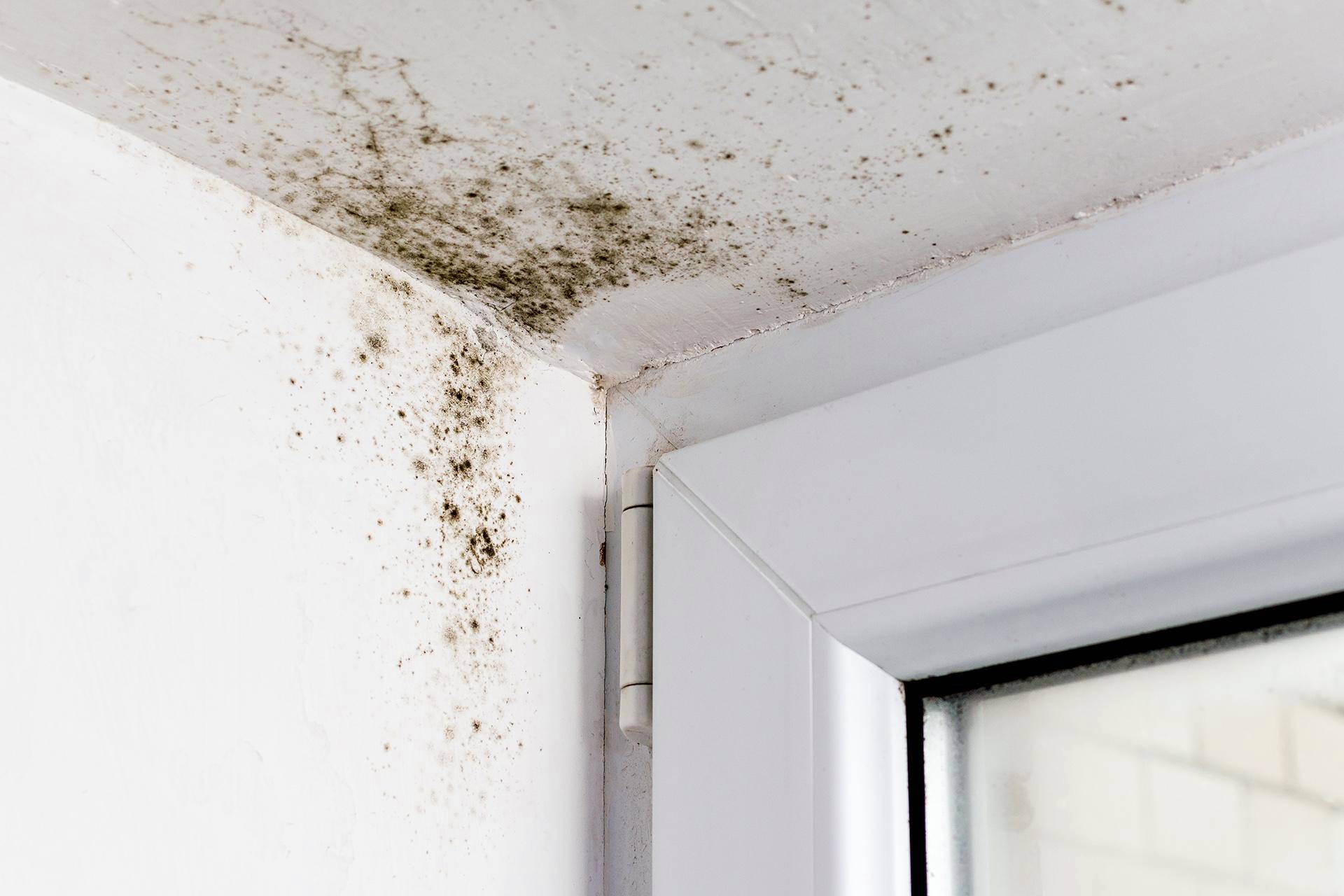
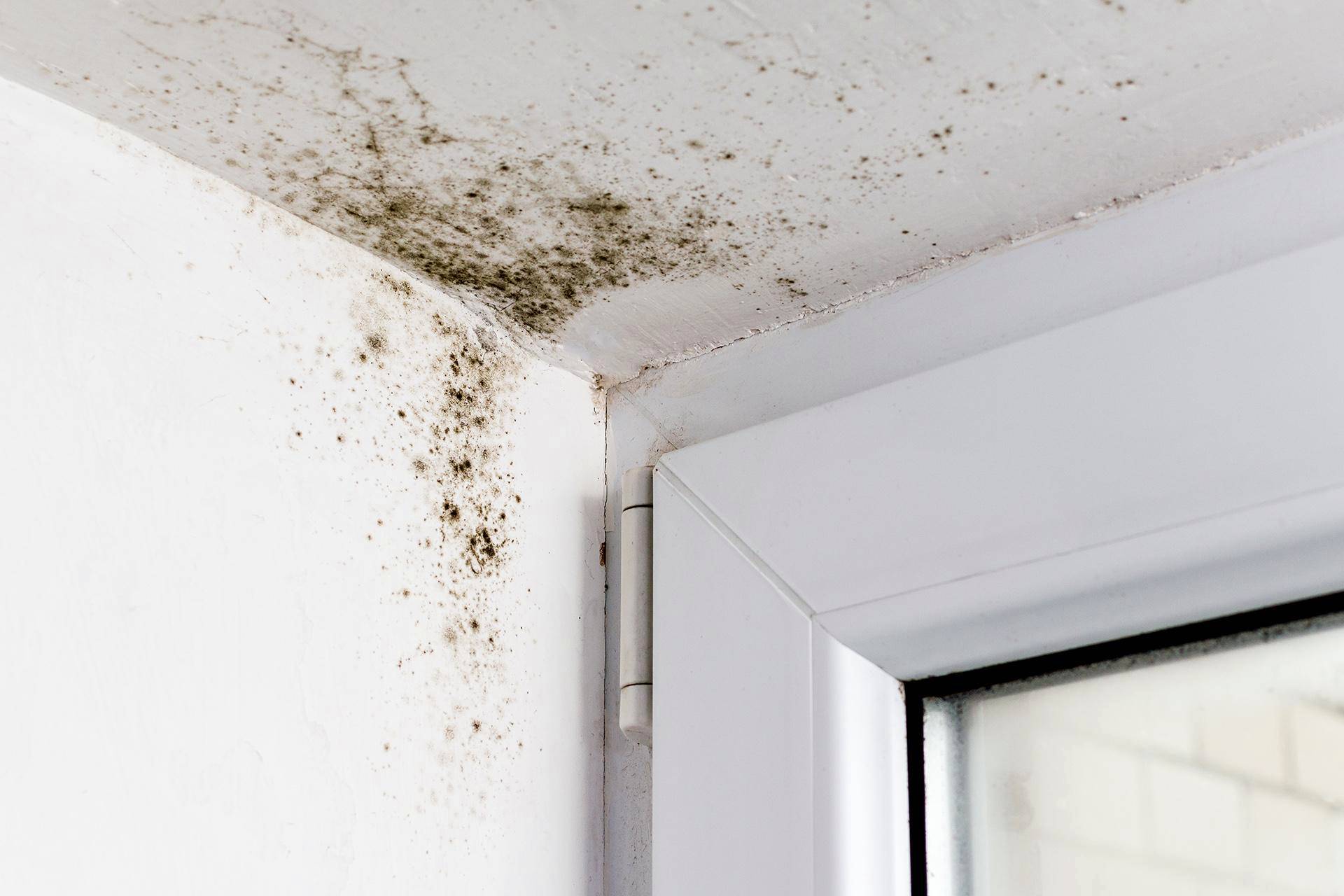
Dark, green or white growth on walls, ceilings or grout.
Water stains
Stains on ceilings or walls from a leak above or behind.
Damp, humid rooms
Condensation on windows or a room that never feels dry.
Peeling or bubbling paint
Moisture getting behind paint or wallpaper.
After water damage
Anywhere that got wet before and was not fully dried.
Leave visible mold alone until the moisture is found — scrubbing or sanding it dry can spread spores into the air.

How mold damage restoration works
Find the water, then the mold.
The first three steps are the water side — HomePro’s part as plumbers. What the fourth involves depends on how far the mold has spread.
- 1
Find the moisture source
The leak, drip, condensation or water intrusion feeding the mold is located.
- 2
Stop and repair it
The leaking pipe, fitting or fixture is repaired so no more water gets in.
- 3
Dry the area
Wet materials and the air are dried so mold has nothing to live on.
- 4
Clean or remove damaged materials
Mold-damaged materials are cleaned, or removed where they cannot be saved.
- 5
Keep it dry
The area is checked again and the conditions that caused it are corrected.
Know which service you need
Restoration, inspection, testing or water damage?
These four terms get used interchangeably, but they are different jobs. This is how they fit together.
| Question | What it is | When it fits |
|---|---|---|
| Mold damage restoration | Stopping the moisture, drying, and cleaning or removing mold-damaged materials | Mold is present and needs to be dealt with |
| Mold inspection | Evaluating a property for visible and hidden mold and the moisture conditions behind it | You suspect mold, are buying or selling, or want to know how far it goes |
| Mold testing | Collecting air or surface samples for laboratory analysis | Mold is suspected but not visible, or a result is needed after cleanup |
| Water damage restoration | Removing water and drying the structure after a leak or flood | Water is on floors or in walls now — before mold has a chance to grow |
In every case, the moisture source has to be found and fixed, or the problem returns.
In more detail
Where mold grows — and what it costs.
Where mold is most often found
- Where water gets in through roofs, windows and pipes
- Cooling and airflow systems — swamp coolers, window units and split systems
- Bathroom floors and walls
- Basement floors and wall coverings
- Anywhere flooding or standing water has been
- Anywhere that has had water damage before
Why the source matters
Every mold job is different because every source of moisture is different. Treating the growth without the cause is the most common reason mold returns. Hidden leaks behind walls and under floors are a frequent cause — see mystery leak detection.
What affects the cost
Because every mold problem is different, the cost varies with the job. The main factors are how severe and widespread the growth is, whether it is inside or outside the building, whether the work is a simple clean-up or a larger removal, and whether special handling is needed for hazardous growth. You should get a written estimate before any work starts.
Choosing who to hire
Ask whoever you hire whether the moisture source will be found and repaired, what exactly will be cleaned or removed, and how the area will be checked afterwards. Get the estimate in writing and read the company’s reviews.
Why HomePro
Mold starts with water. So do we.
HomePro Plumbing & Drains is a family-owned San Diego plumbing company — licensed, bonded and insured. Mold keeps coming back while the water keeps coming in, and water is what plumbers deal with: we find the leak or moisture source, repair it, and explain what we found and what it will cost before any work starts.
- ✓Family owned and operated
- ✓Licensed, bonded and insured
- ✓The moisture source found before anything is opened
- ✓Free estimates before work begins
- ✓One-year warranty on all of our work
- ✓Financing options available
HomePro at a glance
locally
our work
work begins
coverage
When to call a plumber
Is it urgent?
Call right away if
- Water is actively leaking into a wall, ceiling or floor
- A ceiling is stained and sagging
- Sewage or flood water has soaked into the building
Call (858) 251-7070 — the phone is always faster than a form for anything active.
Book a visit if
- There is a musty smell you cannot trace
- Mold keeps coming back after cleaning
- A leak was repaired but the area never fully dried
- Stains are spreading on a ceiling or wall
Use the service request form or schedule service — estimates are free.
Google reviews
What customers say after a HomePro visit.


Reviews from HomePro’s Google Business Profile. See all reviews on Google
Related services
Related mold and water damage pages.

Restoration
Mold Inspection
Evaluating a property for visible and hidden mold and the moisture behind it.
Mold inspection →
Restoration
Mold Testing
When mold testing is worth doing and what a lab result can tell you.
Mold testing →
Restoration
Moisture & Leak Detection
Moisture meters and infrared find hidden water and mold risk.
Moisture & leak detection →
Restoration
Water Damage Cleanup
Water removal, drying and cleanup after leaks, bursts and overflows.
Water damage cleanup →
Leaks
Leak Detection
Hidden leaks under slabs, behind walls and in ceilings located before anything gets opened up.
Leak detection →
Leaks
Leak Repair
Once the leak is found, the damaged pipe or fitting is repaired properly.
Leak repair →Service area
Help with the moisture behind mold, across San Diego County.
HomePro Plumbing & Drains provides leak detection, leak repair and water damage cleanup for homes and businesses throughout San Diego County from its shop at 8910 Activity Rd Suite C, San Diego, CA 92126.
- University City →
- North Clairemont →
- Tierrasanta →
- Pacific Beach →
- Allied Gardens →
- La Mesa →
- Mission Beach →
- Chula Vista →
Not sure we cover you? Call (858) 251-7070.
Mold damage questions
Mold damage restoration, answered.
Straight answers to what San Diego customers ask before booking.
What is mold damage restoration?
Stopping the moisture that lets mold grow, drying the affected area, and cleaning or removing mold-damaged materials so the growth does not return.
Can a leak cause mold?
Yes. Mold grows anywhere there is a moist environment, and a slow leak behind a wall, under a floor or above a ceiling is one of the most common causes. Fixing the leak is the first step in stopping the mold.
How much does mold removal cost?
It varies with the job: how severe and widespread the growth is, whether it is inside or outside, whether it needs a simple clean-up or a larger removal, and whether hazardous growth needs special handling. Get a written estimate before work starts.
What is the difference between mold testing, inspection and restoration?
An inspection evaluates the property for mold and moisture; testing collects samples for laboratory analysis; restoration deals with the moisture and the affected materials.
What does HomePro do about mold?
HomePro Plumbing & Drains is a plumbing company, and our part is the water behind the mold: finding and repairing the leak or moisture source, and cleaning up and drying water damage. Call (858) 251-7070 to talk through what you are seeing.
Does mold grow in San Diego’s dry climate?
Yes. Mold still grows in San Diego — in coastal and inland homes and in apartment buildings — wherever a leak, poor ventilation or past water damage keeps materials damp.
Request service
Mold keeps
coming back?
Tell us where you are seeing it. HomePro will follow up to find the moisture behind it and give you a free estimate.
- Phone(858) 251-7070
- Emailinfo@homeproplumbingsd.com
- Shop8910 Activity Rd Suite C
San Diego, CA 92126 - Backed byFree estimates · One-year warranty on our work · Financing options available
Prefer to write it down? Use the service request form at the top of this page.
