



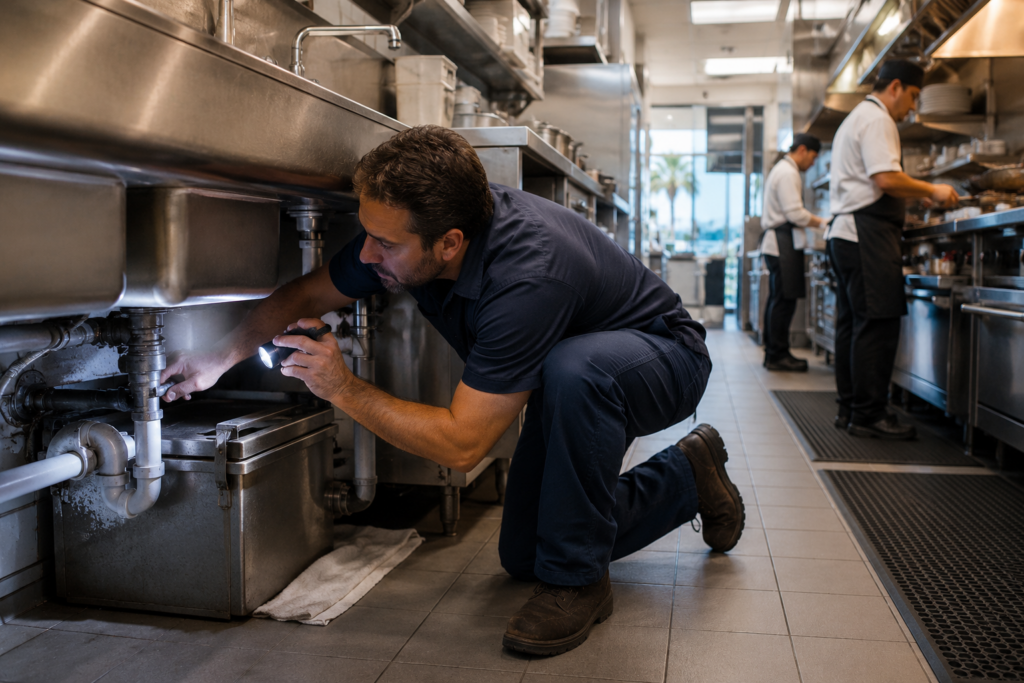
 For most San Diego restaurants, a scheduled maintenance contract is the smarter long-term investment because it prevents the costly shutdowns that emergency plumbing only reacts to—but emergency plumbing remains essential for sudden failures no plan can fully predict. In practice, the two aren’t rivals; the best-run kitchens use a maintenance contract as their foundation and keep an emergency provider on speed dial for the unexpected. This guide breaks down what each approach costs, how each works, and exactly when to lean on one over the other, so you can keep your dining room open and your health inspector satisfied.
 Understanding Emergency Plumbing Services
Emergency plumbing is exactly what it sounds like: a reactive, on-demand service you call when something has already gone wrong. A backed-up floor drain during the Friday dinner rush, a burst supply line flooding the prep area, an overflowing grease trap, or a gas line leak that forces an immediate evacuation—these are the scenarios that trigger an emergency call.
How it works: You phone a commercial plumber (ideally one offering 24/7 dispatch), describe the failure, and a technician is dispatched as quickly as possible—often within one to three hours for true emergencies. The plumber diagnoses on arrival, performs the most direct fix to restore operation, and bills for the visit afterward. Because the work is unplanned and urgent, it almost always carries premium pricing.
Typical costs: Emergency commercial plumbing in San Diego generally runs higher than standard rates because of after-hours dispatch fees, weekend or holiday surcharges, and the labor intensity of urgent repairs. Expect a service call/diagnostic fee in the rough range of $150–$400 just to get a technician on-site, with total repair invoices for serious events (sewer line backups, slab leaks, major line breaks) climbing anywhere from $500 into the thousands depending on severity and access. These figures are ballpark estimates—always confirm current pricing directly, as rates shift with l
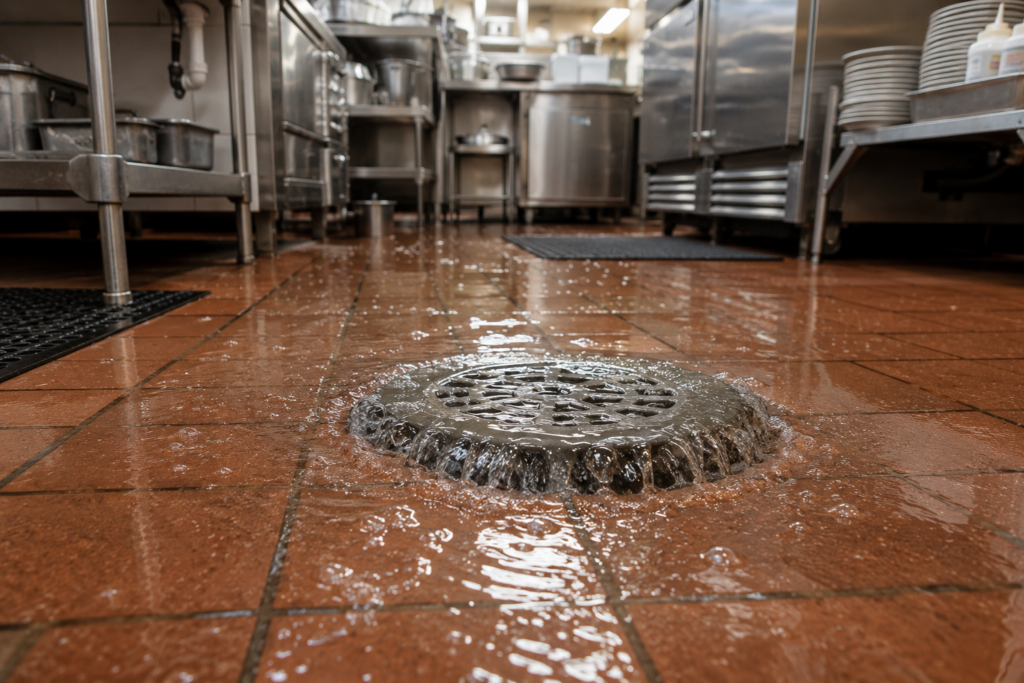
abor markets and material costs.
Core benefits: Speed and flexibility. You pay only when you need help, with no recurring commitment. For a brand-new restaurant still managing tight startup cash flow, or a small operation with newer plumbing, paying as-you-go can feel sensible. Emergency service is also non-negotiable for genuine catastrophes—no maintenance plan eliminates the possibility of a freak failure.
Ideal use cases: Sudden, unforeseen failures; restaurants in newly built or recently re-piped spaces; operators who genuinely cannot predict their cash flow month to month; and as a complement to a maintenance plan for the rare event that slips through the cracks.
Understanding the Scheduled Maintenance Contract
A scheduled maintenance contract (sometimes called a preventive maintenance agreement or service plan) is a proactive arrangement in which a commercial plumber inspects, cleans, and services your restaurant’s plumbing on a recurring schedule—monthly, quarterly, or semi-annually—for a predictable fee.
How it works: You sign an agreement that defines a scope of recurring tasks. For a restaurant, that scope typically includes hydro-jetting or cabling kitchen drain lines to clear fat, oil, and grease (FOG) buildup; pumping and inspecting the grease interceptor; checking water heaters, backflow prevention assemblies, and pressure regulators; testing shut-off valves; and camera-inspecting sewer laterals periodically. Many contracts also include priority response and discounted rates when an emergency does occur, effectively bundling the two models together.
Typical costs: Maintenance contracts are usually billed as a flat monthly or quarterly fee, or per-visit at a discounted contract rate. For a single-location San Diego restaurant, a recurring plan often lands in the low-to-mid hundreds per month depending on kitchen size, the number of drains, grease-trap capacity, and visit frequency. While that’s a standing line item on your P&L, it’s predictable—and predictable beats surprise five-figure flood remediation every time. Again, treat these as planning estimates and request a tailored quote.
Core benefits: Predictability, fewer surprises, longer equipment life, and compliance peace of mind. San Diego County’s health and environmental regulations around FOG disposal and grease interceptor maintenance are strict, and a documented maintenance schedule helps you stay inspection-ready. Regular drain cleaning keeps lines flowing during your busiest covers, and early detection of a slow leak or corroding line means you fix a small problem on your schedule instead of a catastrophic one during service.
Ideal use cases: Established restaurants, high-volume kitchens, older San Diego buildings with aging galvanized or cast-iron pipe, multi-location and property-managed operations, and any operator who values uptime and documented compliance over the lowest possible monthly outlay.
| Attribute | Emergency Plumbing | Scheduled Maintenance Contract |
|---|---|---|
| Cost Structure | Pay-per-incident; premium after-hours rates | Predictable flat or recurring fee |
| Approach | Reactive — fixes problems after they occur | Proactive — prevents problems before they start |
| Downtime Risk | Higher; failures often hit during peak service | Lower; issues caught early during scheduled visits |
| Compliance Support | Minimal; no ongoing documentation | Strong; documented service history for health inspections |
| Equipment Lifespan | Shorter; neglect accelerates wear | Longer; routine care extends drain, trap & heater life |
| Response Priority | Standard queue unless you’re a regular client | Priority/expedited response typically included |
| Best For | Sudden, unpredictable failures | Established, high-volume, or older-building kitchens |
Pros and Cons Breakdown
Pros of Emergency Plumbing
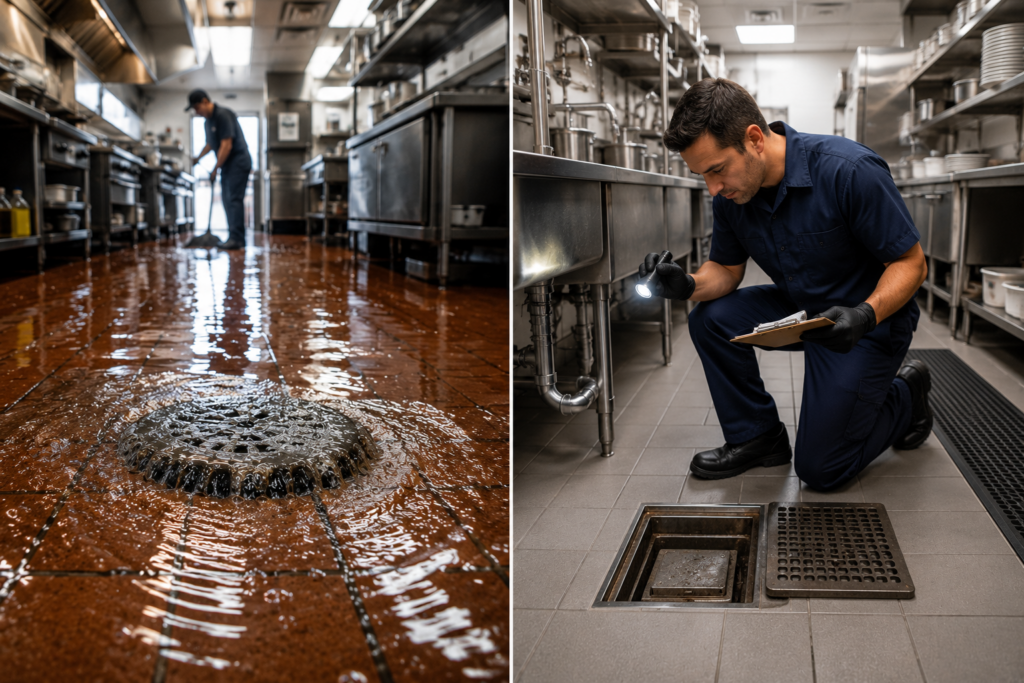 No recurring commitment: You pay only when something breaks, which keeps fixed overhead low for cash-strapped or brand-new operations.
- Immediate crisis response: A genuine catastrophe—gas leak, sewage backup, burst main—gets handled fast by a dispatched technician.
- Flexibility: You’re free to choose a different provider each time and shop the situation.
- Essential safety net: Even with a maintenance plan, emergency service covers the truly unpredictable.
Cons of Emergency Plumbing
- Premium pricing: After-hours, weekend, and holiday surcharges mean you pay the most when you’re least prepared.
- Reactive by nature: The failure has already disrupted service, spoiled product, or forced a closure before help arrives.
- No prevention: Underlying causes (grease buildup, corroding pipe) keep festering between calls.
- Compliance gaps: You build no documented service history, which matters when a San Diego health inspector asks for grease-trap records.
Pros of a Scheduled Maintenance Contract
- Predictable budgeting: A flat recurring fee turns plumbing into a manageable line item instead of a financial ambush.
- Maximized uptime: Proactive drain cleaning and inspections keep your kitchen running during peak hours.
- Regulatory readiness: Documented FOG and grease-interceptor servicing supports San Diego County compliance.
- Longer equipment life and priority service: Routine care extends asset lifespan, and most contracts include faster response plus discounted emergency rates.
Cons of a Scheduled Maintenance Contract
- Ongoing fixed cost: You pay even in months when nothing visibly goes wrong (though that’s the point of prevention).
- Requires a reliable partner: The value depends entirely on the quality and consistency of the provider.
- Not a force field: Contracts reduce emergencies dramatically but can’t eliminate every freak failure.
- Upfront commitment: Some operators hesitate to sign a recurring agreement, especially in their first year.
Which Option Is Better? The Ultimate Showdown
The honest answer is that the two services solve different problems, and the smartest San Diego restaurants use both—a maintenance contract as the backbone, emergency service as the safety net. But if you’re forced to prioritize, here’s how to decide.
Run the math on downtime, not just repair cost. A single closed dinner service in a busy San Diego neighborhood like the Gaslamp Quarter, Little Italy, or North Park can cost thousands in lost covers, comped meals, wasted inventory, and reputational damage on review sites. Compared to that, a maintenance contract’s monthly fee is modest insurance. Restaurants live and die on consistency; a plan that keeps your drains flowing and your grease trap compliant protects revenue you’d otherwise never see threatened—until it’s gone.
Choose emergency-only if you’re a newly opened restaurant in a recently constructed or freshly re-piped San Diego space, your plumbing is genuinely low-risk, and you need to conserve every dollar of startup capital. In that window, paying as-you-go can be defensible—provided you’ve identified a trusted 24/7 commercial plumber in advance so you’re not scrambling when the unexpected hits.
Choose a maintenance contract if you operate a high-volume kitchen, run multiple locations, or occupy one of San Diego’s many charming older buildings where decades-old cast-iron and galvanized lines are quietly corroding behind the walls. The coastal climate, mineral-heavy water, and relentless grease load of a working kitchen all accelerate wear. For these operators, proactive commercial leak detection and routine service aren’t optional—they’re the difference between a planned Tuesday-morning visit and a flooded floor on a sold-out Saturday night.
The verdict: For the established, growth-minded San Diego restaurateur, the maintenance contract wins decisively on total cost of ownership, compliance, and uptime. Keep emergency service as your backstop, not your strategy.
Talk to a San Diego Commercial Plumbing Specialist
There’s no pressure and no obligation—just clarity. If you’d like an honest assessment of whether your kitchen is better served by a maintenance contract, emergency coverage, or a blend of both, a local commercial specialist can walk your space, review the underground water, sewer, and gas lines behind your kitchen, and outline a plan that fits your volume and budget. San Diego restaurant owners can contact our team to schedule a no-pressure commercial consultation.
Conclusion & Recommendation
Emergency plumbing and scheduled maintenance contracts answer two different questions: “What do I do when something breaks?” versus “How do I make sure it doesn’t break in the first place?” For the vast majority of established San Diego restaurants—especially those in older buildings or running high-volume kitchens—a maintenance contract is the foundation that protects uptime, controls costs, and keeps you inspection-ready under San Diego County’s FOG regulations. Emergency service remains the indispensable backstop for the unpredictable. Build your strategy on prevention, keep a trusted 24/7 plumber in your contacts, and you’ll spend far less time mopping floors and far more time serving guests.
Frequently Asked Questions
1. Do San Diego restaurants legally need a grease trap maintenance schedule?
1. Do San Diego restaurants legally need a grease trap maintenance schedule?
San Diego County and local wastewater authorities enforce strict FOG (fats, oils, and grease) regulations, and food-service establishments are generally required to maintain and clean grease interceptors regularly and keep records. A scheduled maintenance contract makes documenting that compliance far easier than reactive service. Always verify current requirements with your local jurisdiction, as rules are updated periodically.
2. How much does a commercial plumbing maintenance contract cost for a restaurant?
2. How much does a commercial plumbing maintenance contract cost for a restaurant?
Pricing varies with kitchen size, number of drains, grease-trap capacity, and visit frequency, but single-location San Diego restaurants often see recurring plans in the low-to-mid hundreds of dollars per month. Request a tailored quote, since every kitchen’s layout and volume are different.
3. Is emergency plumbing more expensive than scheduled maintenance?
3. Is emergency plumbing more expensive than scheduled maintenance?
Per incident, yes—emergency calls carry after-hours dispatch fees and surcharges, and they don’t prevent the next failure. Over a year, restaurants that rely solely on emergency service typically spend more once you factor in downtime, spoiled inventory, and repeat problems compared to a preventive plan.
4. What plumbing problems are most common in San Diego restaurant kitchens?
4. What plumbing problems are most common in San Diego restaurant kitchens?
Grease-clogged drain lines, overflowing or under-maintained grease traps, water heater failures, backflow assembly issues, and corroding pipes in older buildings are the most frequent. The coastal climate and mineral-heavy water can also accelerate scale buildup and corrosion.
5. Can I have both emergency coverage and a maintenance contract?
5. Can I have both emergency coverage and a maintenance contract?
Yes, and it’s the recommended approach. Most maintenance contracts already bundle priority emergency response and discounted rates, giving you proactive care plus a fast safety net for the rare unpredictable failure.
6. How often should a restaurant’s drains be professionally cleaned?
6. How often should a restaurant’s drains be professionally cleaned?
High-volume kitchens often benefit from monthly or quarterly hydro-jetting to stay ahead of FOG buildup, while lower-volume operations may do well with semi-annual service. A commercial plumber can recommend a cadence based on your specific drain load.
7. Will a maintenance contract really prevent kitchen downtime?
7. Will a maintenance contract really prevent kitchen downtime?
It dramatically reduces it. Proactive inspections and cleaning catch slow leaks, partial clogs, and aging components before they fail during service. No plan guarantees zero incidents, but prevention shifts the vast majority of problems off your busiest hours.
8. What should I look for in a commercial plumber for my San Diego restaurant?
8. What should I look for in a commercial plumber for my San Diego restaurant?
Prioritize licensed, insured commercial specialists with restaurant experience, 24/7 availability, familiarity with San Diego County FOG and health regulations, and the ability to offer both maintenance plans and emergency response. Documented service histories and camera-inspection capabilities are strong signals of quality.