


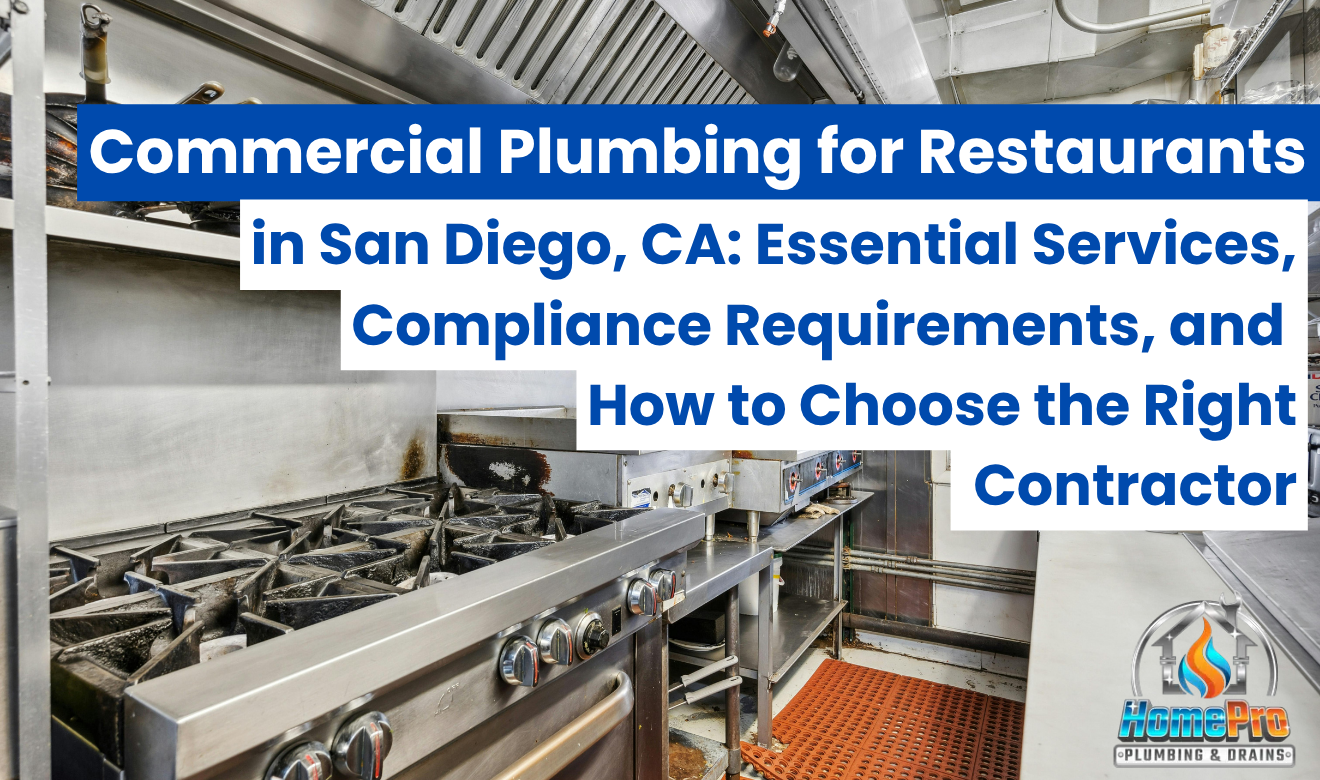
Commercial Plumbing for Restaurants in San Diego, CA: Essential Services, Compliance Requirements, and How to Choose the Right Contractor
Executive Summary
Commercial plumbing for restaurants in San Diego must be designed, installed, and maintained to pass permit/inspection requirements while preventing the most common shutdown causes: drainage/FOG failures, cross-connection violations, and undersized gas or hot-water systems. The definitive fix is a code-driven scope that prioritizes indirect waste, grease interception access, backflow protection, correct load calculations, and serviceability (cleanouts, shutoffs, and off-hours execution).
3 Core Insights
- Design for Compliance and Maintenance Access: San Diego restaurant systems perform best and pass inspections more reliably when interceptors, cleanouts, shutoffs, receptors, and testable backflow assemblies are installed where they can actually be serviced without removing equipment or opening walls.
- FOG Control Prevents the Majority of Operational Failures: Correct interceptor selection/sizing plus disciplined pumping, upstream solids control, and jetting/camera verification when recurrence appears is the most effective way to prevent grease clogs that can spread into shared laterals and cause shutdowns.
- Right-Size Gas and Hot Water to Protect Peak Service: Verifying total BTU demand, developed length, regulator conditions, and hot-water recovery for dish and sink peaks eliminates low-flame, ignition, and temperature-drop problems that most commonly surface during the busiest service windows.
Commercial plumbing for restaurants San Diego is the specialized design, installation, maintenance, and repair of water, gas, drainage, and grease-control systems used in food-service kitchens to meet health, safety, and code requirements. In San Diego, restaurant plumbing commonly includes grease interceptor sizing and service, floor sink and indirect waste setup for prep sinks, backflow prevention on beverage and irrigation lines, and high-capacity hot water delivery for dishwashers and three-compartment sinks. A typical kitchen build-out may require correctly vented mop sinks, properly trapped floor drains under dish and cook lines, and durable waste piping that withstands high-temperature discharge and heavy solids. Compliance often involves plumbing permits and inspections tied to California Plumbing Code and local enforcement, plus grease management expectations that can impact how frequently interceptors must be pumped and how waste lines are cleaned. High-risk failure points include grease clogs in shared laterals, slab leaks beneath dining areas, failed pressure regulators that damage ice machines, and undersized gas or water lines that cause low flow at peak service. Choosing the right contractor comes down to documented experience with restaurant shut-down prevention, clear scope on interceptor access and cleanouts, accurate load calculations for hot water and gas demand, and a plan for off-hours work that keeps kitchens operating during weekend rushes.
What Restaurant Plumbing Must Cover in San Diego Kitchens
Restaurant plumbing systems must reliably deliver potable water and fuel, remove waste without cross-connections, and control fats, oils, and grease (FOG) to protect public sewer infrastructure. In San Diego, these requirements are enforced through permit/inspection workflows and the California Plumbing Code (CPC) as adopted locally.
A compliant food-service plumbing scope typically includes:
- Domestic water distribution for hand sinks, prep sinks, dish areas, beverage systems, and janitorial fixtures
- Sanitary and waste/vent piping for floor sinks, floor drains, mop sinks, and building sewer connection
- Indirect waste and air gaps/air breaks for equipment that cannot discharge directly to the sanitary system (common in prep and beverage lines)
- Grease interception (hydromechanical grease interceptors or gravity grease interceptors where required)
- Backflow prevention on designated high-hazard connections (irrigation, carbonators, some process equipment, and hose bibbs where required by the water purveyor)
- Commercial gas piping to cooking equipment with proper sizing and accessible shutoffs
These elements are evaluated during plan review (when applicable), rough inspection, and final inspection—especially where new fixtures, grease systems, or gas piping are installed or altered.
Permits, Inspections, and Code Baselines That Drive Compliance
Permits and inspections are the primary compliance mechanism for new installations, relocations, or material alterations to plumbing and gas systems in restaurants. In California, plumbing work is generally governed by the California Plumbing Code and gas piping by the California Plumbing Code and applicable fuel-gas provisions as adopted by the local Authority Having Jurisdiction (AHJ).
In practice for restaurant build-outs and remodels, an AHJ inspector will verify:
- Approved materials and joining methods for hot water, waste, and vent lines (including temperature-rated piping for kitchen discharge conditions)
- Trap and vent protection for floor drains, floor sinks, mop sinks, and multi-compartment sinks
- Indirect waste receptor configuration (proper receptor sizing and separation to prevent cross-contamination and siphonage)
- Backflow assemblies installed in accessible locations with clearance for testing/repair, where required by code and water purveyor rules
- Gas shutoffs, sediment traps where required, and pressure testing prior to activation
- Grease interceptor installation with accessible lids, vents (as applicable), and cleanouts placed to support maintenance
If you want a clear picture of what happens during an on-site visit and how scopes are typically verified, reference what to expect during a plumbing service call for a step-by-step walkthrough of how technicians document issues and confirm next actions.
Kitchen Layout Plumbing: Indirect Waste, Floor Sinks, and Critical Drainage Details
Most preventable restaurant shutdowns start with incorrect drainage design: missing indirect waste, poor venting, or floor drains that cannot handle solids and temperature swings. A San Diego kitchen should be laid out so every wet fixture and piece of equipment has a code-appropriate discharge path and service access.
High-impact layout requirements and field-proven best practices include:
- Indirect waste to floor sinks for prep sinks and equipment drains where an air gap/air break is required to prevent contamination of potable/food-contact systems.
- Floor drains under dish and cook lines should be trapped, vented as required, and positioned for realistic washdown pathways (not blocked by equipment legs or built-ins).
- Mop sinks should have a properly vented trap and a durable faucet/valve set rated for commercial service.
- Dedicated cleanouts should be placed so technicians can cable or jet the line without removing equipment or cutting ceilings.
- High-temperature discharge planning (dish machines and high-temp equipment) must consider pipe material limits and the risk of premature joint failure.
Common failure modes tied to layout errors:
- Repeated backups at peak service from long horizontal runs with insufficient cleanouts or poor slope control.
- Sewer gas odors from trap seal loss (often caused by improper venting, negative pressure, or infrequently used floor drains).
- Cross-contamination risk from direct connections where indirect waste is required.
Grease Interceptors and FOG Control: What Actually Prevents Clogs
Grease management is a system: interceptor sizing/placement, maintenance access, and scheduled removal of accumulated FOG and solids. In San Diego, grease-related stoppages can impact not only your suite but shared laterals in multi-tenant buildings, making proactive control non-negotiable.
Operationally important requirements for grease control include:
- Correct interceptor selection (hydromechanical vs. gravity) based on kitchen discharge characteristics and AHJ/wastewater expectations.
- Accessible lids and service clearance so pumping and inspections can occur without dismantling floors, patios, or tenant improvements.
- Upstream solids control (screens, scraping, dry-wipe practices) to reduce sludge loading and extend service intervals.
- Downstream cleanouts so lines can be cleared if grease migrates beyond the interceptor.
When grease lines begin to slow, the fastest way to restore full diameter and reduce repeat clogs is often commercial jetting. For targeted removal of hardened grease and heavy buildup, consider hydrojet plumbing as the service pathway most aligned with restaurant drain conditions.
Backflow Prevention for Beverage, Prep, and Irrigation Lines
Backflow prevention protects the potable water supply from contamination due to backpressure or backsiphonage, and it is routinely enforced by water purveyors in addition to building inspectors. Restaurants commonly trigger backflow requirements because of carbonated beverage systems, hose connections, and irrigation systems.
Where backflow control commonly appears in food-service sites:
- Beverage equipment and carbonators (often treated as high hazard due to potential chemical or contaminant pathways)
- Irrigation connections (typically require a testable assembly depending on the system and water purveyor rules)
- Mop sinks and hose bibbs where chemical injectors, sprayers, or continuous hoses create cross-connection risks
Key compliance and maintenance points:
- Install location must be testable and serviceable (clearance matters for annual testing and rebuilds).
- Assembly type must match hazard level as required by the enforcing agency (water purveyor + AHJ).
- Documentation matters: keep test reports and repairs on file for audits and tenant/landlord records.
Gas and Hot Water Sizing: The Two Systems That Break Service First
Most “mystery performance issues” in restaurants trace back to undersized gas lines or inadequate hot water recovery for peak demand. Correct sizing requires load calculations using manufacturer input ratings and realistic simultaneous-use assumptions for service windows.
What should be verified during planning or troubleshooting:
- Gas piping capacity based on total BTU demand, developed length, allowable pressure drop, and meter/regulator configuration.
- Dedicated shutoffs and accessible isolation points so equipment can be serviced without shutting down the entire kitchen.
- Hot water delivery that supports:
- High-use dishwashing cycles
- Three-compartment sink fill and turnover
- Hand sink compliance without temperature swings
- Pressure regulation to prevent damage to ice machines, filtration heads, and solenoids—especially where incoming pressure fluctuates.
When hot water is inconsistent, you can usually narrow root causes quickly by comparing fixture flow, recovery, and temperature stability; this aligns closely with the diagnostic approach in what causes low hot water supply.
Core Restaurant Plumbing Metrics (San Diego Compliance-Oriented)
This table summarizes the field metrics and inspection triggers that most directly affect restaurant operations: drainage reliability, grease control, cross-connection safety, and service access. Use it as a build-out and maintenance checklist to reduce failed inspections and emergency shutdowns.
| Feature / Metric | Specifications | Local Guidelines |
|---|---|---|
| Grease interceptor access | Serviceable lids/manways, clear working space for pumping and inspection, and upstream/downstream cleanouts where required by design | Expect enforcement through permit inspection and wastewater/FOG program requirements; lack of access commonly triggers maintenance failures and repeat blockages |
| Indirect waste (prep & equipment) | Air-gapped or air-break discharge to an approved receptor (often a floor sink) to prevent contamination pathways | Reviewed at inspection for cross-connection control; incorrect direct connections are frequent correction items during remodels |
| Floor drains & trap protection | Properly trapped and vented drainage with realistic placement for washdown; trap seals maintained to block sewer gas | Often flagged when odors appear or drains dry out; corrective action may involve venting review and trap primer strategies where appropriate |
| Backflow assemblies | Correct device type for hazard level; installed with testability, isolation valves, and clearance for service | Typically driven by water purveyor requirements plus inspection; test reports should be retained for compliance |
| Gas line sizing & shutoffs | Sized for total BTU load and developed length; accessible shutoff valves at appliances; pressure testing prior to activation | Inspected under permit; undersizing shows up as low flame, ignition issues, and performance drops during peak demand |
Troubleshooting High-Risk Failure Points Before They Shut Down Service
Restaurant plumbing fails in predictable ways: grease restriction, hidden leaks, pressure regulation problems, and sewer defects in shared laterals. A structured triage process reduces downtime and avoids “fix the symptom” service calls.
Use this priority sequence when symptoms appear:
- Confirm the scope: single fixture vs. whole branch vs. whole building (multiple restrooms + kitchen impacted suggests mainline/lateral).
- Identify grease vs. structural obstruction:
- Grease restrictions typically worsen gradually and surge during high-volume discharge.
- Structural issues (root intrusion, offsets, collapse) often show repeated backups at the same interval even after clearing.
- Inspect with camera when recurrence is present to document pipe condition and locate defects.
- Verify pressure regulation if ice makers, dish machines, or valves are failing prematurely.
- Check for slab or subfloor leaks if there are unexplained water bills, warm spots, or persistent moisture near dining areas or walls.
For a technical overview of professional methods used to locate concealed failures without unnecessary demolition, review how plumbers detect hidden leaks.
Choosing a Restaurant Plumber in San Diego: The Non-Negotiables
The best contractor choice is the one that can prove operational readiness: permitting competence, off-hours execution, and documentation quality. Restaurants need plumbers who plan around service windows and who understand inspection correction cycles.
Use this selection checklist:
- Restaurant-specific documentation:
- Clear scope defining grease interceptor access points, cleanouts, and any trenching/core drilling
- Written plan for water shutoffs, equipment isolation, and restart testing
- Load and sizing verification:
- Gas load summary by appliance BTU input
- Hot water demand approach aligned to dish + sink peak periods
- Maintenance continuity planning:
- Drain line cleaning schedule aligned to FOG output
- Backflow testing intervals per water purveyor requirements
- Off-hours capability to reduce shutdown risk during weekend rushes and to support emergency response.
For foundational context on how plumbing systems are defined and categorized, see plumbing for standardized terminology that often appears in permits, inspection notes, and equipment specifications.
Operational Wrap-Up: Keep Your Kitchen Open, Safe, and Inspectable
Reliable restaurant plumbing in San Diego comes from code-correct layout, provable cross-connection control, and aggressive grease and drain management. The fastest way to prevent shutdowns is to design for maintenance access, validate gas/hot-water loads, and document compliance so inspections are predictable rather than disruptive.
To keep systems stable through peak service, prioritize these actions:
- Build for access: interceptor lids, cleanouts, shutoffs, and test ports must be reachable without removing equipment.
- Protect public health: indirect waste and backflow prevention should be treated as critical safety infrastructure, not optional upgrades.
- Prevent repeat stoppages: jetting and camera verification are the standard approach when grease and solids are chronic.
- Plan around the rush: schedule invasive work off-hours and require restart checks for leaks, pressure, and drainage performance before reopening.
Frequently Asked Questions
Keep Your Kitchen Open—Fix Restaurant Plumbing the Right Way, Before It Becomes a Shutdown
In a San Diego restaurant, plumbing isn’t a “we’ll get to it later” system—it’s the backbone of your service line, your health compliance, and your ability to stay open through the weekend rush. When grease builds up, drains slow, hot water can’t keep up, or a backflow requirement gets missed, the result usually isn’t minor inconvenience—it’s emergency downtime, failed inspections, damaged equipment, and a reputation hit you don’t get to undo.
Trying to patch commercial kitchen plumbing with quick fixes (or a contractor who doesn’t live in restaurant work) is how you end up with the worst-case chain reaction: recurring grease clogs that migrate into shared laterals, floor drains that back up right at peak service, pressure issues that destroy ice machines and beverage components, and “surprise” code corrections that stall openings and remodels. Add in undersized gas or hot water systems, and you can lose performance across the entire line—slow dish cycles, inconsistent hand sink temps, and equipment that won’t run right when every burner is on.
You need a restaurant plumbing partner who understands permits, inspections, FOG control, indirect waste and air gaps, backflow requirements, and how to schedule work so you don’t lose revenue. If you want your plumbing to pass inspection, hold up under volume, and stay serviceable for the long haul, bring in a local commercial specialist who can diagnose the real root cause and build a plan that prevents repeat emergencies.
Related Posts
Plumbing Code Compliance Services in San Diego, CA: Requirements, Permits, and Inspection Checklist
Key Takeaways In San Diego, “code-compliant plumbing” generally means meeting the California Plumbing Code as…

How to Choose a Licensed Plumbing Contractor in San Diego, CA
Key Takeaways Choosing a Licensed Plumbing Contractor San Diego homeowners can rely on comes down…