


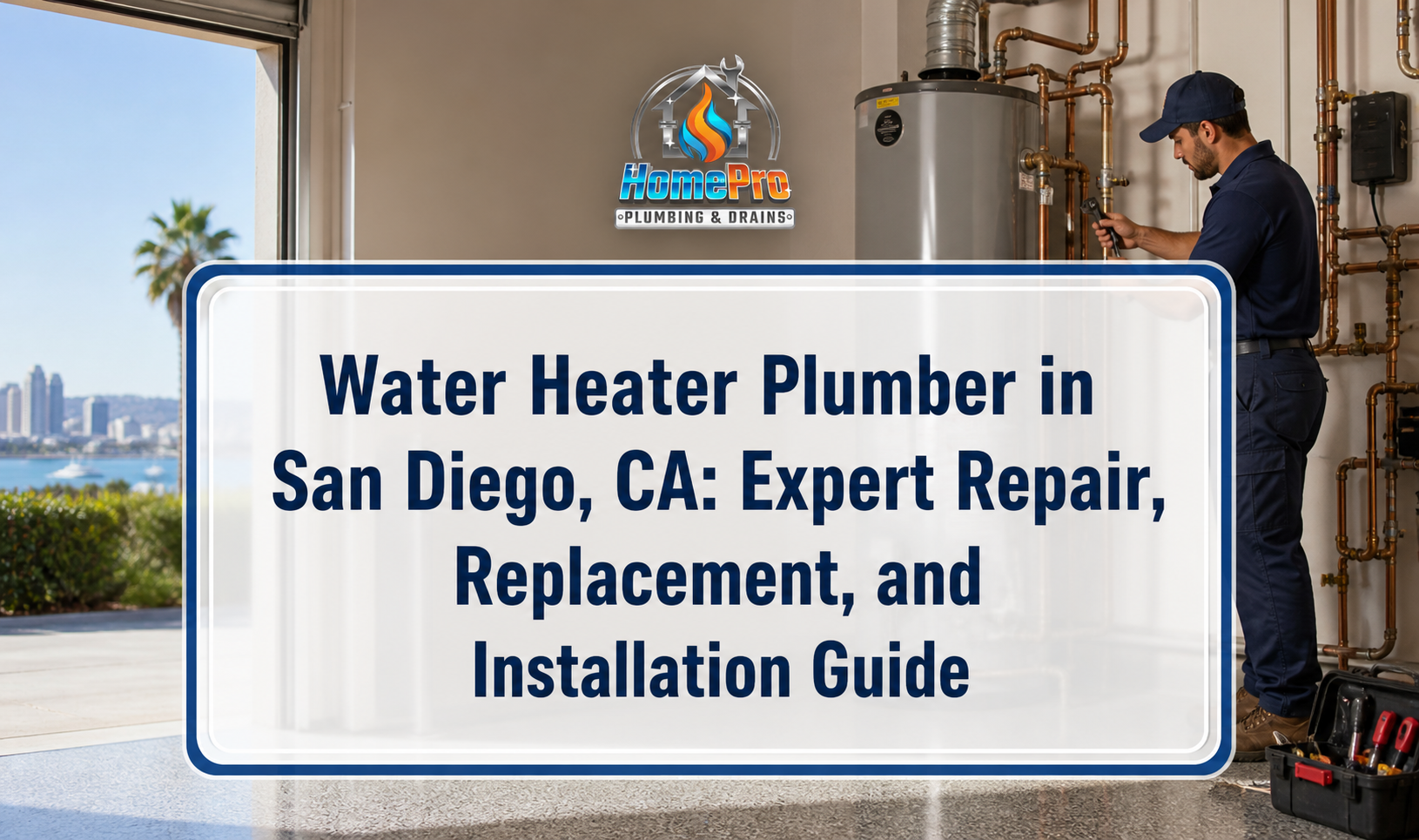
Water Heater Plumber in San Diego, CA: Expert Repair, Replacement, and Installation Guide
Executive Summary
A licensed Water Heater Plumber in San Diego resolves hot-water problems by diagnosing the true failure point and completing repairs or replacements in a way that meets CPC/CMC, manufacturer instructions, and local permit/inspection requirements. The definitive fix is the one that restores safe operation—combustion/venting (gas), electrical controls (electric), and pressure protection (T&P/expansion control)—while avoiding repeat breakdowns and inspection failures.
Core Insights
- Licensing & Permits Protect Safety: Proper licensing and permit coordination ensure combustion air, venting, seismic strapping, and T&P discharge details are installed to code so the unit operates safely and passes inspection.
- Diagnosis Should Follow a Safety-First Checklist: Accurate troubleshooting starts by isolating energy sources and verifying draft/venting, thermostats/elements or burner function, and pressure-safety devices before swapping parts.
- Replacement Must Match Site Constraints: A correct replacement is sized for demand and recovery while also matching vent category, gas line sizing, electrical capacity, expansion control needs, and drain/condensate routing for the installation location.
A Water Heater Plumber San Diego is a licensed professional who diagnoses, repairs, replaces, and installs residential and commercial water heaters to meet California code and local permitting rules. In San Diego, common service calls include no-hot-water after a failed thermocouple on older gas units, lukewarm showers caused by sediment-packed tanks in hard-water areas, and pilot-light outages triggered by dirty burner assemblies or poor combustion air. Technical troubleshooting often starts with verifying safe gas shutoff, checking draft at the vent, inspecting the temperature and pressure relief valve discharge line, confirming proper seismic strapping, and testing electrical supply and thermostats on electric models. Replacement planning typically focuses on matching gallon capacity to household demand, setting correct recovery rates for morning peak usage, and ensuring the venting type and gas line sizing fit the existing utility layout. Installation details frequently include adding an expansion tank when required, routing condensate for high-efficiency units, installing a drain pan and correctly sized drain line for garage or interior locations, and confirming safe clearances and access for future maintenance.
What a San Diego Water-Heater Specialist Does (and Why Licensing Matters)
A qualified water-heater plumber handles combustion safety, electrical controls, pressure protection, and code-compliant installation details—not just “getting hot water back.” In California, proper licensing and permits protect occupants from fire, scalding, carbon monoxide exposure, and flood loss.
At a minimum, a professional water-heater scope in San Diego commonly includes:
- Diagnosis: verifying gas/electrical supply, thermostatic control function, burner/element operation, draft/venting performance, and leak sources.
- Repair: replacing failed gas control valves, thermocouples/thermopiles, igniters, heating elements, anode rods, and T&P valves when permitted by manufacturer instructions and condition.
- Replacement & installation: anchorage (seismic strapping), drip leg/sediment trap on gas where required by code and appliance instructions, correct vent category, and safe discharge routing for the temperature-and-pressure relief valve.
- Permitting coordination: many replacements trigger local permitting/inspection requirements; an installer who routinely pulls permits avoids failed inspections and resale issues.
Water-heater work intersects core rules in the California Plumbing Code (CPC) and California Mechanical Code (CMC) (for venting/combustion air). San Diego-area jurisdictions can also enforce local amendments and manufacturer installation instructions as enforceable standards.
Fast Troubleshooting: Symptom-to-Cause Checks That Actually Narrow the Problem
Effective troubleshooting follows a repeatable safety-first sequence: isolate energy sources, confirm pressure protection, then test heat production and distribution. This reduces misdiagnosis and prevents unsafe resets on compromised equipment.
Use this field-style checklist to determine the likely failure point before parts swapping:
- Confirm the complaint precisely
- No hot water at all vs. “not enough” vs. “water is too hot” vs. “hot water smells” vs. “hot water runs out quickly.”
- Rule out cross-connection / mixing issues
- A failed single-handle shower valve or recirculation crossover can mimic a bad heater by blending cold into hot lines.
- If symptoms affect only one bathroom, inspect that fixture first (cartridge, balancing spool, check valves).
- Gas storage heater checks (common in older homes)
- Verify gas shutoff valve position and that the appliance is receiving fuel (qualified testing only).
- Inspect burner assembly: lint, rust scale, spider webs, or restricted air intake can cause pilot dropout and poor combustion.
- Confirm vent draft and vent connector condition; spillage/backdraft is a life-safety issue and must be corrected before operation.
- Electric storage heater checks
- Confirm breaker integrity and correct voltage at the unit (lockout/tagout practices for safe testing).
- Test upper/lower thermostats and heating elements; a single failed element often produces “lukewarm then cold” behavior.
- Tankless / high-efficiency checks
- Verify inlet screen cleanliness and adequate flow rate to activate ignition.
- Confirm condensate drain is open for condensing units; a blocked condensate line can lock out the appliance.
- Check for scale accumulation on the heat exchanger in hard-water areas (maintenance flushing becomes a reliability requirement, not an option).
- Pressure-safety checks (all types)
- Inspect the temperature & pressure relief (T&P) valve and ensure its discharge pipe terminates correctly and is not capped or reduced improperly.
- Look for signs of thermal expansion: periodic dripping at T&P, banging, or pressure spikes—often addressed with an expansion tank when the home has a pressure-reducing valve or backflow prevention.
If your hot water fades quickly, compare your symptoms to the failure patterns described in how water heaters fail over time—it’s a helpful way to distinguish normal aging from a correctable component failure.
San Diego Code-Driven Installation Details Inspectors Commonly Flag
Most failed inspections come from a small set of repeat issues: missing seismic restraints, unsafe T&P discharge routing, and improper venting or combustion air. Correcting them requires following CPC/CMC rules plus the manufacturer’s listing and instructions.
When planning a replacement, these are the items that typically need to be verified on-site:
- Seismic strapping: California requires water heaters to be braced/anchored to resist earthquake motion (commonly two straps—upper and lower—properly blocked and fastened).
- T&P relief valve discharge piping: must terminate in an approved location, drain by gravity, and remain unobstructed. The discharge line must not be capped and must be installed per CPC requirements and manufacturer guidance.
- Combustion air: gas appliances in closets/garages may need code-compliant combustion air openings; starving combustion air increases CO risk and causes nuisance shutdowns.
- Venting compatibility: a replacement must match the vent category and materials permitted (e.g., Type B vent vs. listed plastic venting for condensing appliances). Improper venting is both a safety and code violation.
- Gas line sizing and sediment control: appliance input rate changes (BTU) can require gas line resizing; sediment traps/drip legs may be required depending on configuration and local enforcement of code and listing instructions.
- Drain pan and drain routing: for interior/garage placements where leakage can damage the structure, a pan with a correctly routed drain line is frequently required by local interpretation and good practice.
Choosing the Right Replacement: Capacity, Recovery, and Efficiency Options
A correct replacement is sized for peak-hour demand and installed to match the home’s fuel source, venting, and electrical capacity. In San Diego, efficiency incentives and space constraints often make tankless or heat pump units a realistic upgrade—but only if the site conditions fit.
Storage tank vs. tankless vs. heat pump: selection rules that hold up in the field
The best choice depends on demand pattern, incoming water temperature, and utility constraints—not marketing. A plumber should validate venting route, electrical amperage, and location clearances before recommending a unit.
- Standard storage (gas/electric): simplest replacement when you need predictable installation with minimal utility changes.
- Tankless (gas/electric): strong option where continuous hot water is needed, but gas units often require correctly sized gas piping and manufacturer-listed venting; hard water increases descaling needs.
- Heat pump water heaters: high efficiency but require adequate air volume/clearance, condensate management, and a suitable location (often garage). They can be excellent in mild climates when installed per listing and CPC.
For a deeper look at on-demand systems and installation constraints, see tankless water heater installation.
Core Specs and Local Compliance Checklist (Data Table)
This table consolidates the technical metrics that most directly affect safety, inspections, and day-to-day performance. Use it as a scoping sheet when comparing bids or planning a permit-compliant replacement.
| Feature / Metric | Specifications | Local Guidelines |
|---|---|---|
| Seismic restraint | Bracing/anchorage method appropriate for tank diameter and wall framing; typically two straps (upper/lower) with solid blocking. | California installations are expected to meet CPC bracing requirements; San Diego inspections routinely verify strap placement, fasteners, and clearance from controls. |
| T&P relief valve and discharge line | Listed T&P valve installed at the tank’s designated port; discharge piping installed per CPC/manufacturer instructions and not capped/obstructed. | Inspectors commonly check termination location, gravity drainage, and that the line is not reduced or routed unsafely. |
| Venting category and materials | Matches appliance listing (e.g., atmospheric vent vs. direct vent vs. condensing plastic vent); correct diameter and slope per manufacturer. | CMC compliance and manufacturer instructions govern; vent changes often trigger permit scrutiny. |
| Thermal expansion control | Expansion tank sized/installed when a closed system exists (commonly when PRV or backflow prevention is present). | San Diego-area upgrades frequently add expansion tanks to prevent nuisance T&P discharge and pressure spikes. |
| Drain pan & drain line (where leakage can damage property) | Corrosion-resistant pan of adequate size with properly routed drain to an approved location. | Often required/expected for garage and interior installations; local enforcement focuses on preventing structural water damage. |
Repair vs. Replace: A Decision Framework That’s Defensible
The repair/replace decision should be tied to measurable risk: tank integrity, safety device condition, and parts availability. A licensed plumber prioritizes life-safety and code compliance over short-term cost.
Replacement is usually the correct call when any of the following are present:
- Active tank leakage (from the tank body or bottom seam), because the pressure vessel has failed.
- Repeated pilot outage tied to combustion/venting defects that cannot be corrected within the existing venting design without major rework.
- Severe internal corrosion evidenced by rust-colored water plus documented anode failure and advanced tank age.
- Unsafe T&P conditions (missing valve, capped discharge, or persistent discharge caused by overheating/overpressure) until corrected; continued operation is not acceptable.
Repair is often reasonable when:
- Electric units have a single failed element/thermostat and the tank is sound.
- Gas units have a verified failed thermocouple/thermopile or clogged burner that can be serviced safely.
- Hot water quality issues trace to sediment and scale that can be flushed/controlled, and the tank shows no leakage.
Preventive Maintenance in Hard-Water Areas: Actions That Extend Service Life
In many San Diego neighborhoods, mineral scale accelerates efficiency loss and component failure. A scheduled maintenance plan targets sediment removal, anode health, combustion cleanliness, and leak prevention.
A practical maintenance routine includes:
- Annual visual safety check: vent connector condition, signs of spillage, burner compartment cleanliness, and water/gas shutoff accessibility.
- Tank flushing (as conditions require): reduces sediment packing that causes rumbling noises, slow recovery, and lukewarm delivery.
- Anode rod inspection/replacement (tank models): protects the tank lining; ignoring the anode is a common cause of premature tank failure.
- Tankless descaling (frequency depends on hardness and usage): restores heat transfer and reduces ignition/overheat faults.
- Pressure management: verify the home’s PRV performance and expansion control to prevent chronic T&P discharge.
If you’re building a broader maintenance cadence beyond the water heater, align it with the guidance in how often home plumbing should be maintained.
When Water Heater Problems Are Actually Plumbing-System Problems
Not every “water heater issue” is caused by the heater. Distribution piping, valves, and hidden leaks can reduce hot-water delivery and inflate bills even when the heater is functioning correctly.
Common non-heater culprits include:
- Failing shower mixing valves allowing cold-to-hot crossover (hot turns lukewarm at multiple fixtures).
- Partially closed or defective shutoff valves on hot supply lines reducing flow rate.
- Recirculation problems (stuck check valve, incorrectly set timer/aquastat) causing temperature instability.
- Hidden hot-side slab or wall leaks that bleed off hot water and force constant reheating; this can present as “never enough hot water.”
When you suspect a concealed leak, the diagnostic methods described in how plumbers detect hidden leaks can help you understand why a targeted inspection is faster and less destructive than trial-and-error repairs.
Related Plumbing Services Often Needed During a Water Heater Job
Water-heater replacements frequently reveal upstream issues such as clogged drains, aging shutoffs, or pressure defects that must be corrected for a safe final install. Bundling corrective work during the same service window reduces repeat labor and accelerates inspection readiness.
Common add-on work during heater repair/replacement includes:
- Pressure regulation fixes when high street pressure or a failing PRV is causing nuisance T&P discharge.
- Gas line adjustments to support a higher-input burner or tankless upgrade.
- Drain improvements for pan lines, condensate routing, or garage drains that are slow or obstructed.
If the jobsite has slow drains or a backed-up garage drain near the heater, scheduling drain cleaning at the same time can prevent pan overflows and make leak events far less damaging.
San Diego Homeowner Checklist: What to Verify Before and After Installation
A homeowner can validate critical quality points without specialized tools by checking labeling, visible piping, and safe termination points. These checks align with what inspectors and experienced plumbers look for during turnover.
Pre-install verification
Confirming scope and compliance items before work begins prevents change orders and failed inspections. The goal is to ensure the new unit matches the site’s venting, fuel, and clearance constraints.
- Confirm the fuel type (natural gas vs. propane) and electrical requirements match the home utilities.
- Ask how venting will be verified (draft, materials, route, and clearances).
- Confirm whether a permit is required for your jurisdiction and who is responsible for scheduling inspection.
- Verify whether an expansion tank will be installed if the system is closed (common with PRVs/backflow devices).
Post-install verification
After installation, a few visual and functional checks confirm the system is safe and serviceable. Any deficiencies should be corrected immediately—especially venting and T&P discharge issues.
- Water heater is securely strapped (not loose, not rubbing sharp edges).
- T&P discharge line is present, unobstructed, and terminates safely.
- No water seepage at flex connectors, unions, nipples, or the gas control valve area.
- For gas units: stable ignition and normal burner operation; no persistent shutdowns.
- Temperature setpoint is reasonable to reduce scalding risk (many homes target ~120°F, adjusted for household needs and any code/health requirements).
For a broader understanding of what a professional visit should include, review what to expect during a plumbing service call.
Clear, Code-Aware Wrap-Up: Safe Hot Water Starts With Correct Installation
A San Diego water-heater plumber’s value is measurable: safer combustion and venting, correct pressure relief protection, earthquake anchorage, and a replacement plan that matches household demand without violating CPC/CMC requirements. When diagnosis follows a disciplined checklist and installation follows code plus manufacturer instructions, you get reliable hot water, smoother inspections, and fewer repeat breakdowns.
For additional context on how water-heater work fits into the larger field of plumbing, it helps to remember the heater is only one component in a pressure-controlled, code-regulated system—so the best results come from treating safety devices, distribution piping, and maintenance as one complete package.
Frequently Asked Questions
Stop Guessing at Hot Water—Get a San Diego Water-Heater Pro Who Installs It to Pass Inspection
When your water heater acts up, it’s tempting to “just try a part” or watch a quick video and hope for the best. But water-heater problems aren’t simple appliance issues—they’re a high-risk mix of gas or high-voltage power, combustion air, venting, pressure control, and code-required safety devices. One wrong move can turn a “no hot water” inconvenience into a carbon monoxide hazard, a scalding risk, a gas leak concern, or thousands in water damage from an improper relief line, loose connections, or a failed tank.
In San Diego, replacing or installing a water heater also means getting the details right for California code and local permitting—seismic strapping, correct venting category, safe T&P discharge routing, combustion air requirements, expansion tank needs in closed systems, and proper drain pan/drain line protections where leakage can damage the structure. If any of those are off, you can end up with nuisance shutdowns, failed inspections, expensive rework, and the kind of “quick fix” that keeps breaking at the worst possible time.
Bring in a licensed local specialist who knows the common San Diego failure patterns (sediment, scale, pilot issues, airflow problems, undersized gas lines, tankless maintenance needs) and can diagnose the real cause—so you don’t pay twice. Whether you need a targeted repair, a permit-ready replacement, or a smarter upgrade plan, you’ll get safer operation, better performance, and a setup that’s built to last.
Related Posts

Bathroom Plumbing Repair in San Diego, CA: Expert Fixes, Costs, and What to Expect
Executive Summary Bathroom Plumbing Repair San Diego is resolved most reliably with a diagnostic-first service…

Kitchen Plumbing Repair in San Diego, CA: Expert Troubleshooting, Costs, and Fast Fixes
Executive Summary Kitchen Plumbing Repair San Diego is resolved most reliably by isolating the water,…