


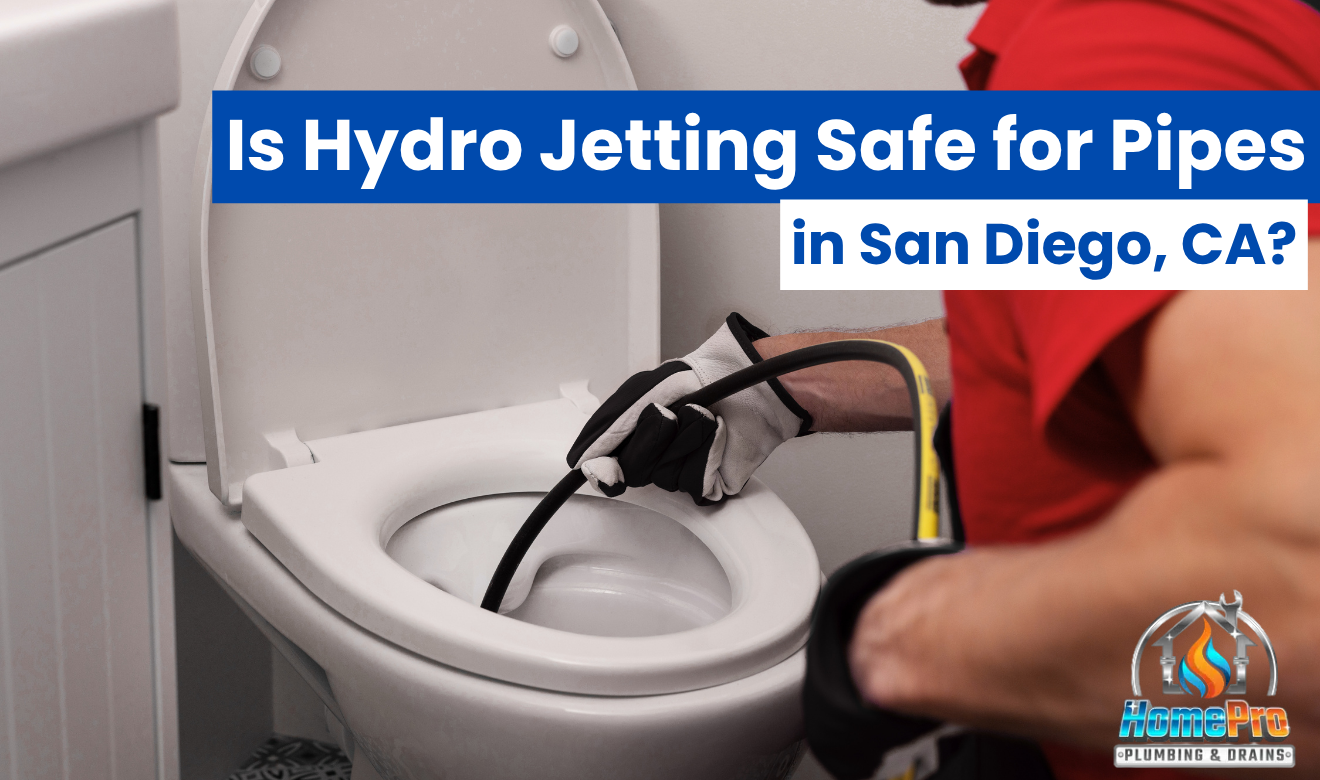
Is Hydro Jetting Safe for Pipes in San Diego, CA?
Executive Summary
Hydro jetting is generally safe for most San Diego residential pipes when performed by a qualified technician who inspects the line first and adjusts pressure/nozzle selection to the pipe’s material and condition. It delivers a chemical-free, wall-scouring clean that often outperforms snaking for recurring buildup-related clogs, but it may be unsuitable for severely deteriorated or collapsed lines.
Key Takeaways
-
Hydro jetting cleans beyond the clog: It uses high-pressure water to scour pipe walls and flush debris out, not just punch through a blockage.
-
Pipe condition determines safety: PVC/ABS is typically well-suited, cast iron/clay can be safe if intact, and fragile materials like Orangeburg or damaged lines may require alternatives.
-
Camera inspections prevent damage: Pre-jet video helps identify cracks, offsets, bellies, corrosion, and root entry points so pressure and technique can be safely tailored.
-
Best for buildup and many root intrusions: Jetting excels at grease, sludge, soap scum, biofilm, and some scale, and can remove fine roots—though broken pipes still need repair for long-term results.
-
Provider process matters more than equipment: The best hydro jet plumbing San Diego results come from verified diagnostics, controlled passes, and post-clean confirmation (flow testing and/or after-camera footage).
Yes—hydro jetting is generally safe for most pipes in San Diego, CA when it’s done correctly and the line is inspected first. It uses high-pressure water to clear clogs without harsh chemicals, which makes it a smart option for many homes looking for the best hydro jet plumbing San Diego residents can rely on. For example, it can blast through grease buildup in kitchen drains, flush out sludge and soap scum in bathroom lines, and cut through tree-root intrusions in outdoor sewer laterals. That said, older, brittle, or already-damaged pipes may need a camera inspection and a lower-pressure approach to avoid making existing cracks worse.
What hydro jetting is (and how it works)
Hydro jetting is a drain- and sewer-cleaning method that uses a specialized hose and nozzle to deliver high-pressure water through a pipe. The goal isn’t just to “poke a hole” through a clog—it’s to scour the inside walls of the line and flush debris out of the system. That deep-cleaning effect is a big reason homeowners searching for the best hydro jet plumbing San Diego providers often choose jetting over basic snaking.
In practical terms, hydro jetting can:
- Break up and wash away grease, sludge, and food waste
- Remove soap scum and hair buildup that narrows bathroom drains
- Clear sand/silt that can collect in outdoor drains
- Cut and flush certain types of root intrusion in sewer laterals
How safe is hydro jetting for different pipe materials?
Safety depends on two things: pipe condition and how the technician sets pressure/nozzle selection. Done correctly, hydro jetting is routinely used on many common residential materials found across San Diego.
| Pipe type | Hydro jetting suitability | Key safety note |
|---|---|---|
| PVC / ABS (modern plastic) | Usually very good | Confirm joints and cleanouts are sound; avoid excessive pressure on poorly supported sections |
| Cast iron (older homes) | Often good if structurally intact | Scaling/corrosion may require a camera check first; weakened walls can be a risk |
| Clay sewer (common in older laterals) | Conditional | Cracked or offset joints can worsen; inspection first is important |
| Orangeburg (fiber conduit, very old) | Often not recommended | Material can deform/collapse; alternatives or repair may be safer |
Bottom line: the best hydro jet plumbing San Diego setups are not “one pressure fits all.” The safest results come from matching pressure, nozzle, and technique to the line’s age and condition.
How a pre-jet camera inspection prevents pipe damage
A camera inspection answers one critical question: “Is the pipe strong enough to be jetted at full cleaning pressure?” It also helps pinpoint where the blockage is and what it’s made of (grease, roots, scale, or a foreign object). If you’re aiming for the best hydro jet plumbing San Diego outcome, a camera check is the step that keeps the cleaning effective and controlled.
A typical inspection can reveal:
- Cracks, separations, or bellies (low spots holding water)
- Root intrusion at joints
- Grease layers and sludge thickness
- Corrosion and scaling in cast iron
- Offsets in clay tile that could catch the nozzle
If you want to understand what a normal plumbing visit looks like (timelines, diagnostics, what to ask), this guide is helpful: what to expect during a plumbing service call.
What clogs hydro jetting is best at removing
Hydro jetting shines when the problem is buildup along the pipe walls—not just a single “plug.” That’s why many people looking for the best hydro jet plumbing San Diego service are dealing with recurring clogs.
Grease and kitchen sludge
Grease doesn’t just block a line; it coats the inside diameter and traps food debris. Jetting can strip that coating and restore flow.
Soap scum, hair, and biofilm
Bathroom drains commonly narrow over time due to soap residue, hair, and organic film. Jetting can clean the full circumference of the pipe.
Roots in sewer laterals (when appropriate)
Jetting can cut and flush many fine root intrusions, especially when the line is otherwise intact. However, if roots are entering through a broken section, the “real fix” may require repair after cleaning.
Scale in older cast iron
Mineral scale and corrosion inside cast iron can reduce pipe diameter significantly. Jetting can remove loose scale, but severely deteriorated pipe may require a gentler approach or further work.
Why hydro jetting is often safer than chemical drain cleaners
Chemical drain cleaners can generate heat and use caustic reactions that may be hard on certain plumbing materials and seals—especially if used repeatedly or left sitting in a slow-draining line. Hydro jetting uses water, not harsh chemicals, which is one reason homeowners seeking the best hydro jet plumbing San Diego solutions prefer it for recurring problems.
It also helps avoid a common scenario: chemicals partially open a path, but leave most buildup behind—so clogs come back quickly.
For background context on plumbing systems and how drainage networks are typically configured, see: plumbing.
Cost: what hydro jetting typically costs in San Diego (and what affects price)
Hydro jetting pricing varies widely based on access, pipe length/diameter, severity of buildup, and whether a camera inspection is included. Nationally, consumer pricing guides commonly place hydro jetting in the “few hundred to over a thousand” range for residential work depending on complexity. For example, Angi notes typical hydro jetting costs often fall roughly between $350 and $600, with higher-end jobs reaching $1,000+ depending on the situation.
Common price drivers include:
- Line location: main sewer lateral vs. a short branch drain
- Access: accessible cleanout vs. difficult entry
- Blockage type: grease and sludge vs. heavy root intrusion
- Pipe condition: fragile lines may require slower, staged cleaning
- Diagnostics included: camera inspection before/after
If you’re comparing options, it helps to view hydro jetting as a “cleaning + restoration of flow” service, not just an emergency unclog. That’s often what separates a temporary fix from the best hydro jet plumbing San Diego outcome that stays clear longer.
How long hydro jetting takes (and what to expect during the service)
Most residential jetting appointments can take about 1–2 hours once access is established, but complex sewer laterals with roots, heavy grease, or poor access can take longer.
In many homes, the process looks like this:
- Identify the problem drain and confirm symptoms (slow drain vs. backup)
- Inspect (often with a camera) to assess blockage and pipe condition
- Select nozzle and pressure based on material and debris type
- Jet in controlled passes to break up and flush buildup
- Verify results (flow test and/or post-jet camera check)
That verification step is a hallmark of the best hydro jet plumbing San Diego approach—because it confirms you didn’t just move a clog further down the line.
When hydro jetting may NOT be the right choice
Even though hydro jetting is highly effective, there are situations where it’s not the safest first move.
You may need alternatives or a modified approach if:
- The line is collapsed or severely offset
- There is advanced corrosion in old cast iron with thin walls
- The sewer is Orangeburg (high collapse/deformation risk)
- A blockage is caused by a solid object (toy, rag, debris) rather than buildup
- You have signs of sewage leakage in the yard (cleaning won’t fix a break)
In those cases, the “best” result may start with diagnosing the line and planning a repair rather than forcing high-pressure cleaning.
How to choose the best hydro jet plumbing San Diego homeowners can trust
Because jetting uses powerful equipment, “best” really means “technically competent, careful, and verified.” Use this checklist to screen providers for the best hydro jet plumbing San Diego experience.
Look for a method—not just a machine
- Will they inspect first if the pipe is older or showing warning signs?
- Do they choose nozzles based on grease vs. roots vs. scale?
- Do they confirm results (flow test or post-jet camera)?
Ask the right safety questions
- How do you adjust pressure for older pipes?
- What do you do if the camera shows cracks or offsets?
- Will you stop and recommend repair if jetting could worsen damage?
Prioritize documentation
For main sewer work, video evidence (before/after) is extremely helpful for homeowners and property managers. It also supports smarter decisions if the line later needs repair.
How to keep drains clear after hydro jetting
Hydro jetting can reset your drain line, but habits determine how long it stays that way. People who get the best hydro jet plumbing San Diego results usually pair the service with a simple prevention plan.
- Kitchen: avoid pouring grease down the sink; wipe pans before washing
- Bathroom: use hair catchers; avoid “flushable” wipes (they aren’t drain-friendly)
- Routine hot water flush: periodic hot water rinses can help reduce soap/grease film (not a substitute for cleaning)
- Schedule maintenance when needed: recurring slow drains often indicate buildup returning
If you need a straightforward maintenance option for recurring clogs, professional drain cleaning can be a good complement to jetting—especially for branch lines and smaller fixtures.
Real-world example: grease-clogged kitchen line vs. root-intruded sewer
Example 1 (kitchen grease): A home with frequent sink backups often has grease coating that narrows the line over months or years. Snaking may reopen the center of the pipe, but hydro jetting can remove the grease layer from the walls—typically resulting in longer-lasting flow restoration. This is a classic scenario where the best hydro jet plumbing San Diego choice is about “cleaning the pipe,” not just “clearing the clog.”
Example 2 (roots in a lateral): When a sewer line has fine roots entering at joints, hydro jetting can cut and flush them out. However, if the camera shows joint separation or a cracked section, the roots will likely return until the defect is repaired—so the “best hydro jet plumbing San Diego” outcome is jetting + a repair plan rather than jetting alone.
Why hydro jetting supports water-smart maintenance in San Diego
San Diego has a long history of water-efficiency awareness and periodic drought conditions, making “preventive maintenance” more than just convenience. When drains are heavily restricted, people often resort to repeated chemical treatments and multiple service calls. A well-timed jetting can reduce repeat interventions by thoroughly removing buildup.
In other words: the best hydro jet plumbing San Diego strategy is often proactive—cleaning the line before a full backup triggers an emergency.
“Clear Pipes, Clear Mind”: the trust checklist that matters
Hydro jetting is safe for most pipes when performed with proper inspection, pressure control, and verification. If your home is older, has cast iron or clay sewer segments, or has a history of recurring clogs, the safest path to the best hydro jet plumbing San Diego result is a camera-led approach.
To keep standards high, look for providers who can demonstrate:
- Code-aware plumbing knowledge and documented safety practices
- Diagnostic capability (camera inspection interpretation, not guesswork)
- Experience with older San Diego-era piping (cast iron/clay behaviors and limitations)
- Evidence-based results (post-clean verification)
When those boxes are checked, homeowners typically get the strongest, longest-lasting performance—and that’s what “best hydro jet plumbing San Diego” should actually mean.
Frequently Asked Questions
Ready for a Safe, Camera-Led Hydro Jetting Cleanout?
If you want the best hydro jet plumbing San Diego homeowners can count on, it comes down to doing it the right way—inspect first, set the correct pressure, clear the buildup completely, and verify the results. HomePro Plumbing and Drains makes hydro jetting a smart, safe solution by starting with a clear diagnosis and tailoring the process to your pipe type—so you get cleaner lines, fewer repeat clogs, and real peace of mind.
Related Posts

Plumbing Code Compliance Services in San Diego, CA: Requirements, Permits, and Inspection Checklist
Key Takeaways In San Diego, “code-compliant plumbing” generally means meeting the California Plumbing Code as…

How to Choose a Licensed Plumbing Contractor in San Diego, CA
Key Takeaways Choosing a Licensed Plumbing Contractor San Diego homeowners can rely on comes down…